
 Ground-source heat pump
 Air-source heat pump
 Accessories
 What is a heat pump

 Air stoves
 Pellet boilers
 Ducted air stoves
 Hydro stoves
 Accessories
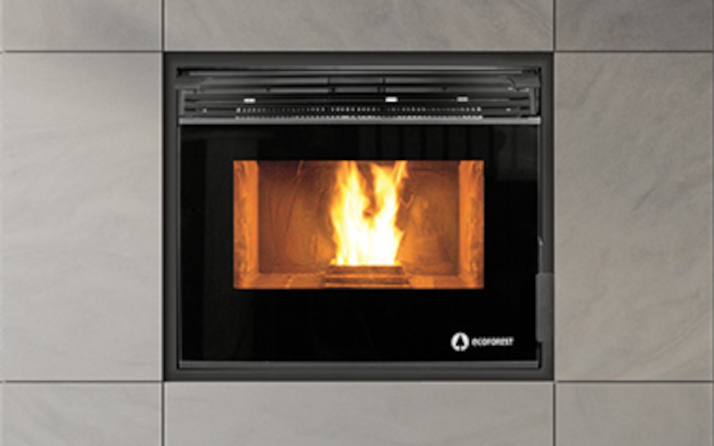 Insert pellet stoves
 Wood stoves
  Wood boilers
 Insert wood stoves
 Charcoal oven




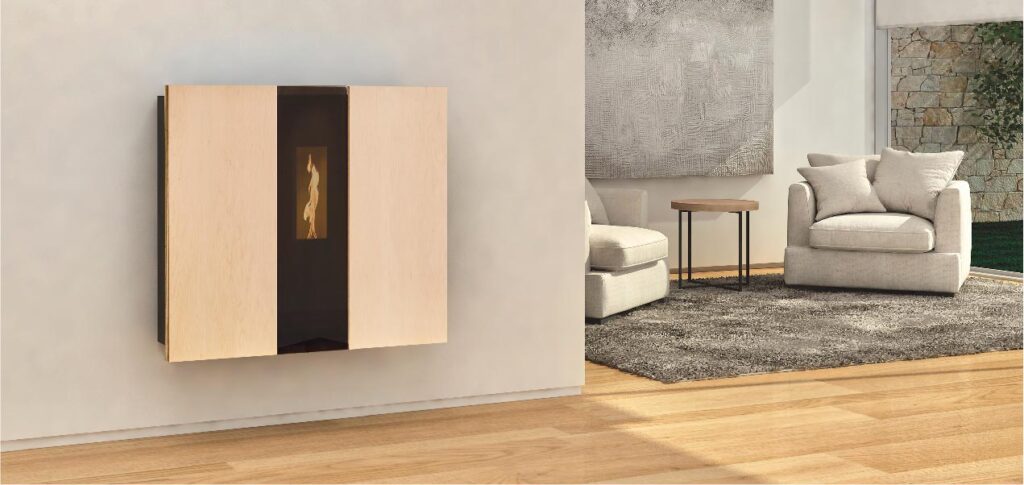
Pellet stoves have become a popular choice for residential heating, combining energy efficiency with modern design. Although technically there are no pellet stoves without a flue, modern flue systems allow for virtually invisible installations, even in homes without a traditional chimney. This solution is achieved through twin wall flue systems, a safe and aesthetically pleasing alternative that complies with RITE regulations.
Are there really pellet stoves without a flue?
Myth vs. reality
All pellet stoves require a flue gas outlet for safety regulations (Reglamento de Instalaciones Térmicas en Edificios – RITE). Combustion generates CO₂ and other by-products that must be evacuated to the outside to avoid health risks. However, advances in design make it possible to hide or integrate the smoke outlet into the building structure, reducing its visual impact.
Twin wall systems: The key to chimneyless installations
Double wall systems consist of insulated stainless steel pipes that evacuate gases to the outside. Their modular design allows two types of installation:
| Type of installation | Advantages | Considerations |
|---|---|---|
| External | Less invasive indoors, ideal for renovations | Visible piping on the facade |
| Internal | Increased thermal efficiency, integrated appearance | Requires drilling ceilings and additional insulation |
These systems are compatible with Ecoforest models such as the Miami or Cordoba Glass, whose 80 mm outlets are perfectly adapted to twin wall pipes.
Stoves with discreet outlets: the practical alternative
Discrete outlets” refer to exhaust systems using small diameter pipes (80-100 mm) and materials such as stainless steel, which can be installed in walls, ceilings or old chimneys. For example, Ecoforest’s Cordoba Glass Canalizable model uses an 80 mm pipe that is integrated into existing ducts or concealed in false ceilings.
Advantages of stoves with integrated flue gas outlet
- Improved aesthetics: Designs such as the Tokio allow a choice of rear or top exit, adapting to different spaces.
- Energy efficiency: Efficiencies above 91% in models such as the Cordoba Canalizable, which takes advantage of every last watt of energy.
- Installation flexibility: Some models, such as the Miami, have a depth of only 16.7 cm, ideal for narrow corridors.
Ecoforest models with inconspicuous outlets
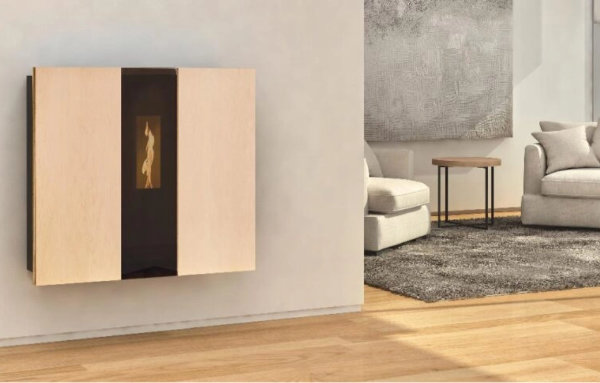
Air stoves: Miami, Cordoba, Tokio
- Miami: The narrowest stove on the market (16.7 cm deep), with 80 mm gas outlet and WiFi system for remote control. Ideal for small spaces.
- Ductable Cordoba Glass: Designed to fit into existing fireplaces, it offers frontal heat output and air channeling to other rooms. Its stainless steel piping is easily concealed.
- Tokio: Combines power (12 kW) with a minimalist design, allowing rear or top smoke outlet through 80 mm pipes.

Inserts: Echo I, Pomegranate, Boston Insert
- Eco I: Traditional model with stainless steel tube exchanger and discreet rear outlet. Compatible with multiple fuels, such as almond shells.
- Boston Insert: Designed to be integrated into chimney openings, it uses internal ducts to conceal the flue pipe.
Milan: Award-winning design and functionality
It stands out for its modern aesthetics and automatic combustion regulation. Its upper smoke outlet is camouflaged in suspended ceilings, ideal for contemporary interiors.
How to choose the ideal stove for your space
Key factors to consider
- Power requirement: For a 55 m² house, models such as the Miami (5.5 kW) are sufficient, while the Tokio (12 kW) covers up to 100 m².
- Type of installation: Ductable ones (e.g. Cordoba) allow heat to be distributed to multiple rooms through 100 mm ducts.
- Architectural design: Built-in stoves such as the Cordoba Glass are integrated into chimneys or walls, avoiding structural modifications.
Regulations and safety (RITE)
- Installation must be performed by certified professionals, following specifications such as:
- Minimum pipe diameter (80 mm for most Ecoforest models).
- Safety distances of 50 cm between the smoke outlet and combustible materials.
- Annual maintenance is mandatory, especially if more than 500 kg of pellets are consumed per season.
Conclusion: Modern heating without compromising aesthetics
Ecoforest pellet stoves demonstrate that it is possible to combine thermal efficiency and innovative design. Although no stove completely dispenses with the flue, solutions such as integrated pipes or built-in models offer virtually invisible alternatives, complying with all safety regulations and opening up new possibilities for interior decoration.
