
 Ground-source heat pump
 Air-source heat pump
 Accessories
 What is a heat pump

 Air stoves
 Pellet boilers
 Ducted air stoves
 Hydro stoves
 Accessories
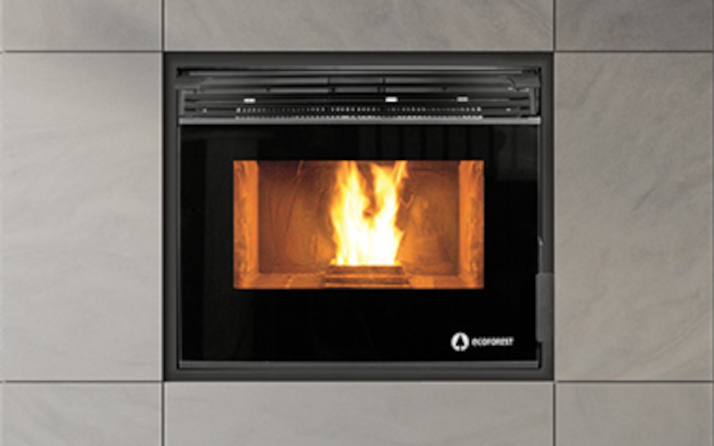 Insert pellet stoves
 Wood stoves
  Wood boilers
 Insert wood stoves
 Charcoal oven





Choosing between a pellet fireplace and a pellet stove is not just a matter of design. It affects how the unit is installed, how it heats your home, how much fuel it uses and what maintenance it will need. In this clear, practical guide, we compare both options to help you make an informed decision.
Quick definitions: what is each one?
- Pellet fireplace
- A built-in or insert unit that fits into an existing or newly created opening with a decorative frame. It typically distributes warm air through forced ventilation and offers a flush-to-wall finish with a wide view of the flames.
- Ideal for living room renovations where a fireplace feel and an integrated solution are desired.
- Pellet stove
- A freestanding unit with a visible metal or ceramic body. It is installed on a level base and remains on display like a piece of heating furniture. Air, ductable and water-heating (hydro) versions are available.
- Ideal for quick installations with minimal building work and greater flexibility in placement.
Installation: building work, flues and timeframes
- Pellet fireplace
- Building work: requires an opening (a purpose-built fireplace surround, insert housing or existing fireplace), a frame and ventilation grilles for convection; warm air can potentially be ducted to other rooms.
- Flue gas exhaust: insulated stainless steel pipe (usually Ø80–100 mm) up to the roof; avoid a wall outlet if municipal regulations restrict it.
- Air supply: an outside air supply is highly recommended for stable combustion.
- Timeframe: 1–3 days with minor building work; longer if a new fireplace wall is being built.
- Installation cost: medium to high (finishes and building work increase the budget).
- Pellet stove
- Building work: minimal; protection for combustible walls, a stable base and safe clearances.
- Flue gas exhaust: a vertical route up to the roof is preferred; some municipalities permit a wall outlet under certain conditions (check local regulations).
- Air supply: a connection to the outside is advisable.
- Timeframe: 3–6 hours for a typical installation.
- Installation cost: low to medium.
Ecoforest tip: always prioritise a vertical flue route up to the roof for stable operation, less soot and fewer problems.
Aesthetics and space
- Pellet fireplace
- An elegant, integrated appearance, flush with the wall. Highly visible flames, with designer frames and fronts.
- Creates a focal point in the living room and can be customised with stone, ceramic or wood (with appropriate clearances and insulation).
- Visually takes up less space; its depth is recessed into the wall.
- Pellet stove
- A wide variety of styles (steel, ceramic, stone) and colours. A prominent appliance with a furniture-like appearance.
- Can be repositioned within the room (subject to technical flue constraints).
If you want a premium fireplace feel and a clean wall finish, the pellet fireplace wins. If you prefer flexibility and speed, choose the stove.
Efficiency and heat distribution
- Pellet fireplace
- Typical efficiencies: 85–92% (depending on the model).
- Distribution: through a front grille, with the option of ducting heat to adjoining rooms (ductable models).
- Ventilation: internal fans; some models offer quieter convection modes.
- Pellet stove
- Typical efficiencies: 85–92% (air models); hydro models transfer heat to water for radiators or underfloor heating.
- Distribution: through the front or sides and, in ductable models, through separate ducts.
- Options: fanless models (natural convection) for maximum quietness.
In terms of effective heat output, both can be equivalent at the same power rating and quality level. The difference lies in how they deliver that heat and their acoustic comfort.
Consumption and running costs
Consumption depends on power output, modulation, pellet quality and the home’s insulation.
- Typical consumption
- Average power: 2–3 kg/h when demand is high; 0.6–1.2 kg/h when modulating.
- Modern pellet stoves and fireplaces optimise consumption with sensors and PID control.
- Electricity
- Both need electricity (for ignition, fans and electronics).
- Natural convection stoves use less electricity (less fan operation).
- Real-world efficiency
- With ENplus A1 pellets, differences in consumption between a fireplace and a stove of the same power rating are minimal. Usage, modulation and maintenance have the greatest impact.
Noise and comfort
- Pellet fireplace
- Built-in fans; because it is recessed and properly ducted, it may transmit less noise to the living room if the opening is correctly insulated.
- Ducting can divert some of the noise to other rooms.
- Pellet stove
- Models with adjustable or switchable ventilation, and even natural convection versions for maximum quietness.
- Proper placement and solid flooring reduce vibrations.
For users sensitive to noise: consider models with adjustable ventilation or natural convection, and an installation with vibration isolation and insulated ducts.
Maintenance and cleaning
- Tasks for both
- Empty the ash pan, clean the glass, and inspect the heat exchangers and flue pipes.
- Annual professional servicing: deep cleaning and checks of seals, sensors and safety systems.
- Pellet fireplace
- Access from the front; some tasks may take longer because the unit is recessed.
- It is very important to plan maintenance access points during building work.
- Pellet stove
- Direct, easy access; maintenance is somewhat more convenient.
Using quality pellets (ENplus A1) will reduce ash and extend the unit’s lifespan.
Regulations and safety (Spain, 2025)
- Product and installation standards: UNE-EN 14785 (domestic pellet appliances), regional regulations and municipal ordinances.
- Flue gas exhaust: preferably through the roof using insulated stainless steel pipe; ensure proper sealing, slopes and distances from roof ridges.
- Combustion air supply: an outside air supply is recommended to avoid negative pressure.
- Clearances from combustible materials: follow the manufacturer’s instructions.
- Wall outlet: subject to local regulations; consult an authorised installer.
Eco-tip: an installation plan signed off by a professional installer reduces the risk of municipal rejection and protects your warranty.
Which should you choose for your situation?
- Choose a pellet fireplace if…
- You are renovating the living room and want an integrated, minimalist finish.
- You want a focal point with a wide view of the flames.
- You can accommodate some building work and want discreet ducting.
- Choose a pellet stove if…
- Your priorities are quick installation, less building work and a tighter budget.
- You need flexibility in placement or the option to move it.
- You want specific options: natural convection, ductable models or hydro models for radiators.
Indicative costs (unit + installation)
- Pellet fireplace: mid-to-high-priced unit + building work → typically a higher total investment than an equivalent stove because of the finishes.
- Pellet stove: mid-priced unit + basic installation → a lower total investment.
Request a personalised quote: your home’s layout, flue route and chosen finishes can change the final cost.
Conclusion
The decision between a pellet fireplace and a pellet stove comes down to priorities: an integrated appearance and planned building work (fireplace) versus flexibility and speed (stove). At the same power rating and quality level, differences in consumption and efficiency are smaller: choosing the right format, installing a flue outlet through the roof and using certified pellets will determine your actual comfort and savings.
At Ecoforest, we design highly efficient units with precise controls and solutions for different styles of home. If you need help choosing the right size or format, we can guide you towards the right choice first time.
