
 Ground-source heat pump
 Air-source heat pump
 Accessories
 What is a heat pump

 Air stoves
 Pellet boilers
 Ducted air stoves
 Hydro stoves
 Accessories
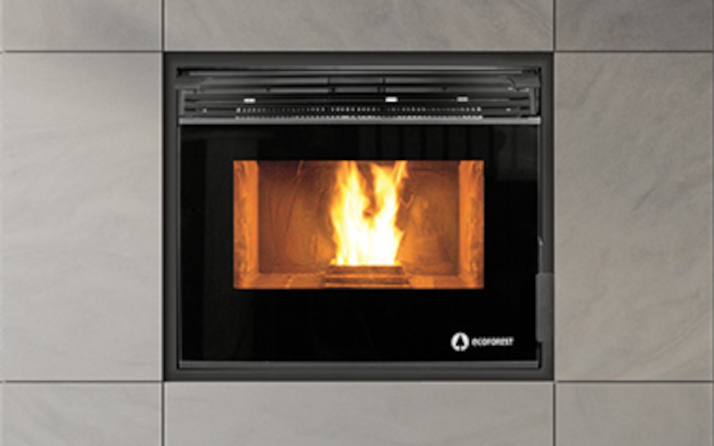 Insert pellet stoves
 Wood stoves
  Wood boilers
 Insert wood stoves
 Charcoal oven





The transition to more sustainable refrigerants is a reality in the HVAC sector. In 2025, R290 (propane) has become the leading refrigerant for high-efficiency air-source heat pumps. Its adoption is driven by European regulations on fluorinated gases (F-Gas), the pursuit of greater energy efficiency and the need to reduce CO₂ emissions.
At Ecoforest, we have embraced this technology in our ecoAIR+ PRO range. Using natural R290 refrigerant, it can reach flow temperatures of up to 75 °C while delivering exceptional seasonal performance. In this guide, we cover what R290 is, the safety regulations in force in 2025, its advantages over other refrigerants such as R32, and key installation recommendations.
1. What is R290, and why is it important for air-source heat pumps?
R290 is propane, a natural, non-fluorinated refrigerant with a GWP (Global Warming Potential) of ≈ 3, compared with GWPs in the hundreds or thousands for traditional HFCs.
Advantages for air-source heat pumps:
- High energy efficiency (higher COP/SCOP) thanks to its thermodynamic properties.
- Higher flow temperatures (up to 70–75 °C), ideal for existing radiators and domestic hot water (DHW) production without an electric heating element.
- Long-term regulatory compliance: avoids the need for future replacement under F-Gas regulations.
- Low refrigerant charge: heat pumps designed for R290 need less refrigerant to deliver the same output.

2. R290 regulations in 2025: charge limits, clearances and ventilation
R290 is an A3 refrigerant (high flammability). Specific regulations therefore govern its installation:
- Refrigerant charge limits:
- Under EN 378, the permitted amount depends on the type of installation and the volume of the room.
- For residential applications and compact heat pumps, limits in enclosed spaces are generally around 1.2–2.5 kg of refrigerant, depending on floor area and ventilation.
- Ecoforest units have been designed to meet these limits without compromising output or efficiency.
- Minimum safety clearances:
- The outdoor unit must be installed in a ventilated location, away from ignition sources.
- A safety zone around the unit is generally required (e.g. 60 cm on critical sides; always check the manufacturer’s manual).
- Mandatory ventilation for indoor installations:
- Indoor installations are permitted only if natural or mechanical ventilation requirements are met.
- In practice, most R290 heat pumps in 2025 are designed for outdoor installation, avoiding additional risks and administrative requirements.
3. Safety: indoor vs outdoor installation
- Outdoor installation:
The recommended and most common option. The unit is placed against an external wall, in a courtyard or on a roof, with adequate ventilation and no additional risks. - Indoor installation (special cases):
Requires compliance with specific regulations: leak detectors, mechanical ventilation systems and, in some cases, ATEX safety certification. Because it increases cost and complexity, it is rarely used in single-family homes. - Ecoforest’s 2025 recommendation:
Install the R290 heat pump outdoors whenever possible; it is the safest option, the easiest to obtain approval for and the least costly in terms of building work.
4. The impact of R290 on seasonal efficiency (SCOP) and DHW
Switching to R290 is not just about environmental or regulatory considerations: it also improves the real-world performance of air-source heat pumps.
- Higher SCOP: thanks to its thermodynamic properties, R290 allows operation at lower compression temperatures, reducing electricity consumption and extending compressor life.
- DHW production without an electric heating element: while many R32 systems need electric backup to reach 60 °C in the storage tank, R290 can produce water at 70–75 °C using only the heat pump.
- Compatibility with older radiators: it makes it possible to modernise apartments and homes with existing radiators, without replacing them with low-temperature emitters.
5. R290 vs R32: 2025 comparison
| Feature | R290 (Propane) | R32 (Difluoromethane) |
|---|---|---|
| Refrigerant type | Natural | Fluorinated (HFC) |
| GWP (climate impact) | ≈ 3 | 675 |
| Safety | A3 (flammable, with charge limits) | A2L (low flammability) |
| Max. flow temperature | 70–75 °C | Typically 55–60 °C |
| SCOP | 3.5–5.0 | 3.0–4.0 |
| High-temperature DHW | Yes, without backup | Often requires an electric heating element |
| Long-term regulatory outlook | Long term (complies with F-Gas requirements for 2030 and beyond) | Transitional (restrictions phased in from 2025 to 2030) |
Conclusion: R32 has served as a transitional alternative, but R290 is the definitive choice in 2025 in terms of efficiency, operating temperature and long-term regulatory compliance.
6. Installers’ FAQs about R290 air-source heat pumps in 2025
1. Is specific training needed to install R290 heat pumps?
Yes. Although an F-gas certificate is not required (R290 is not an HFC), installers must be qualified to work with A3 refrigerants and familiar with charge limits and safety requirements.
2. Is there a power output limit for R290 systems?
No. Thanks to modular design and optimised refrigerant charge, R290 is used in both domestic and commercial-capacity equipment.
3. What happens if there is a leak?
The unit must be located in a ventilated space. Because the gas is heavier than air, the risk is managed through unit placement and by observing the minimum safety clearances specified by the manufacturer.
4. Is R290 equipment more expensive than R32 equipment?
The initial cost may be slightly higher because components have been redesigned, but lower consumption and the absence of regulatory restrictions offset the investment within a few years.
Conclusion
In 2025, switching to R290 air-source heat pumps is about much more than complying with regulations: it means choosing a more sustainable, efficient and future-ready system. Its advantages in SCOP, DHW production without an electric heating element and compatibility with older radiators make it the best option for both new builds and the renovation of homes and buildings.
The Ecoforest ecoAIR+ PRO range combines this natural refrigerant with a safe, quiet design adapted to regulatory requirements, delivering highly efficient heating and cooling solutions with a low environmental impact.
👉 Want to know whether your home or project could benefit from an R290 installation now? Contact Ecoforest, and our certified installers will advise you with a personalised assessment.
