
 Ground-source heat pump
 Air-source heat pump
 Accessories
 What is a heat pump

 Air stoves
 Pellet boilers
 Ducted air stoves
 Hydro stoves
 Accessories
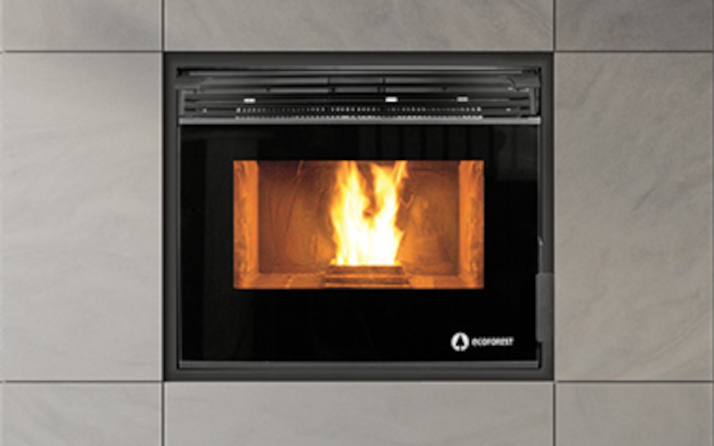 Insert pellet stoves
 Wood stoves
  Wood boilers
 Insert wood stoves
 Charcoal oven




One of the most important questions when considering a pellet stove is: how much does it actually consume, and how much will it cost to heat my home in winter?
In this guide, updated for 2025, we break down actual pellet consumption per hour, calculate the monthly cost and give you the keys to optimizing your stove’s efficiency, ensuring maximum savings and comfort.
1) How much does a pellet stove consume per hour?
Pellet consumption is not fixed; it depends on several key factors:
a) Stove output
Pellet stoves have a range of heat outputs (e.g. 6 kW to 12 kW).
- At maximum output: consumption is higher (e.g. 1.5 – 2.5 kg/h).
- At minimum output (modulation): consumption drops sharply (e.g. 0.5 – 1 kg/h).
b) Home insulation
A well-insulated home retains heat better, allowing the stove to run at minimum output for longer and reducing consumption.
c) Outdoor and desired temperatures
The colder it is outside and the higher the temperature you want indoors, the more pellets the stove will consume.
d) Pellet quality
ENplus A1-certified pellets offer a higher calorific value and lower moisture content, which means more heat per kilogram and lower consumption.
2) Average pellet consumption per hour (indicative ranges)
For a medium-output pellet stove (8-10 kW), typical consumption ranges are:
- At maximum output: 1.5 – 2 kg/h
- At medium output: 1 – 1.5 kg/h
- At minimum output (modulation): 0.6 – 1 kg/h
Practical example:
A 9 kW stove in an 80 m² home with average insulation could consume:
- Start-up (30 min): 1.8 kg/h
- Maintaining temperature (modulation): 0.8 kg/h
3) Pellet prices in Spain (2025)
Pellet prices fluctuate, but remain competitive in 2025.
- 15 kg bag (ENplus A1): 0.35 – 0.40 €/kg (5.25 – 6 €/bag)
- Bulk or big bag: slightly cheaper per kilogram.
For our calculations, we’ll use an average price of 0.37 €/kg.
4) How much will you spend per month in winter? (Real-world calculation)
Let’s estimate the monthly cost for a typical home, assuming average stove use.
Scenario 1: Moderate use (well-insulated home, mild climate)
- Hours of use per day: 5 hours
- Average consumption per hour: 0.8 kg/h (the stove spends a lot of time modulating)
- Daily consumption: 0.8 kg/h × 5 h = 4 kg/day
- Monthly consumption (30 days): 4 kg/day × 30 days = 120 kg/month
- Monthly cost: 120 kg × 0.37 €/kg = 44.40 €/month
Scenario 2: Average use (standard home, temperate climate)
- Hours of use per day: 7 hours
- Average consumption per hour: 1.2 kg/h
- Daily consumption: 1.2 kg/h × 7 h = 8.4 kg/day
- Monthly consumption (30 days): 8.4 kg/day × 30 days = 252 kg/month
- Monthly cost: 252 kg × 0.37 €/kg = 93.24 €/month
Scenario 3: Heavy use (poorly insulated home, cold climate)
- Hours of use per day: 9 hours
- Average consumption per hour: 1.5 kg/h
- Daily consumption: 1.5 kg/h × 9 h = 13.5 kg/day
- Monthly consumption (30 days): 13.5 kg/day × 30 days = 405 kg/month
- Monthly cost: 405 kg × 0.37 €/kg = 149.85 €/month
Note: These calculations are estimates. Actual consumption may vary.
5) Factors that affect the cost of running your pellet stove
a) Pellet quality (a key factor!)
- ENplus A1 pellets: higher calorific value, less ash, lower moisture content. This means you need fewer kilograms to produce the same amount of heat, and your stove stays cleaner.
- Low-quality pellets: higher moisture content, lower calorific value, more ash and clinker. The result: higher consumption, more cleaning and potential damage to the stove.
b) Home insulation
Good insulation (windows, walls, roof) is your best ally in reducing consumption. Prevent heat loss and your stove will run more efficiently.
c) Stove maintenance
A clean stove works better.
- Daily/weekly cleaning: ash pan, burn pot, glass.
- Annual professional maintenance: cleaning the flue, checking components.
d) Scheduling and thermostat
- Thermostat: set your desired temperature and the stove will automatically modulate its output.
- Scheduling: turn the stove on only when you need it.
e) Appropriate output
An oversized stove (too much output for your space) will cycle on and off more frequently, which is less efficient. An undersized stove will not provide enough heat.
6) Ecoforest tips for reducing your pellet stove’s consumption
- Always use ENplus A1 pellets: it’s the smartest investment.
- Insulate your home: check windows, doors and potential thermal bridges.
- Clean your stove regularly: good maintenance means better efficiency.
- Schedule your stove: make the most of the thermostat and timer settings to optimize use.
- Choose the right size: select a stove with the appropriate output for your space.
- Ventilate efficiently: open the windows for 5-10 minutes a day to refresh the air, but no longer.
7) Is a pellet stove cost-effective compared with other heating systems?
Yes, in most cases. Pellets are a cheaper and more price-stable fuel than electricity, heating oil and, often, natural gas.
- Compared with electricity: savings can be 50% or more.
- Compared with heating oil: significant savings and less reliance on fossil fuels.
- Compared with natural gas: competitive, especially in areas without access to the gas network or with high tariffs.
The initial investment in a pellet stove pays for itself quickly thanks to the low cost of fuel and high efficiency.
Conclusion
The actual consumption of a pellet stove per hour and its monthly cost depend on multiple factors, but with the right stove, quality pellets and efficient use, you can enjoy comfortable, affordable heating.
At Ecoforest, our stoves are designed to deliver maximum performance with minimum consumption. If you need help choosing the right stove output or have questions about its efficiency, contact our experts.
