
 Ground-source heat pump
 Air-source heat pump
 Accessories
 What is a heat pump

 Air stoves
 Pellet boilers
 Ducted air stoves
 Hydro stoves
 Accessories
 Insert pellet stoves
 Wood stoves
  Wood boilers
 Insert wood stoves
 Charcoal oven




Do pellet stoves make noise? This is perhaps the million-dollar question for anyone thinking of switching to biomass heating but who values peace and quiet in their living room above all else.
Nobody wants to trade thermal comfort for a constant hum that forces them to turn up the television. The short answer is: yes, they make noise, but not all to the same extent. The key lies in the technology and maintenance.
In this article, we’ll break down why they make noise, how to prevent annoying vibrations, and which Ecoforest models are the quietest.
Where does the sound in a pellet stove come from?
To understand the noise, we first need to know what happens inside that steel box. A pellet stove is more than just a fire; it’s a machine with moving parts:
- The convection fan: This pushes warm air into the room. It is generally the main source of noise.
- The flue gas extractor: A small fan that ensures combustion gases are safely vented outside.
- The auger (feeder): The motor that moves pellets from the hopper to the burner. It usually makes an intermittent sound or a slight “clack-clack.”
- The pellets dropping: The rattle of the wood pellets as they fall into the metal burner.
A quieter way to heat: EcoSilence technology
If noise is your main concern, Ecoforest has developed EcoSilence technology.
How does it work? This system allows the stove to adjust the fan speed or even stop the fans completely at certain times, prioritizing natural convection. The result is a warm room without the background noise of forced-air circulation.
Recommended models with EcoSilence mode
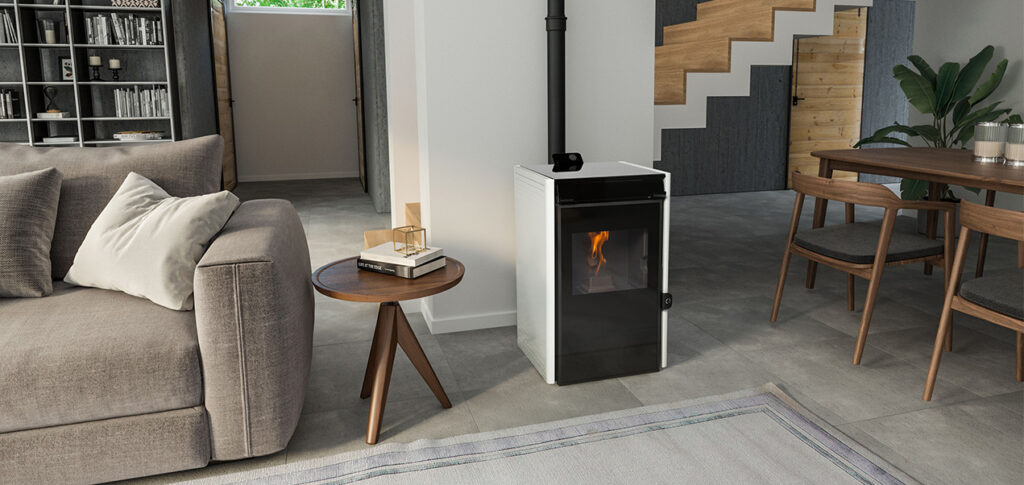
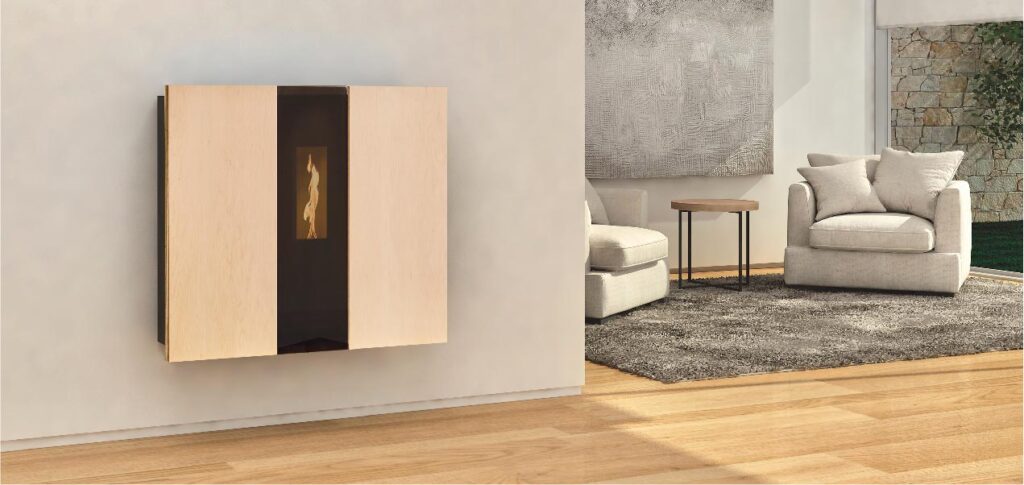
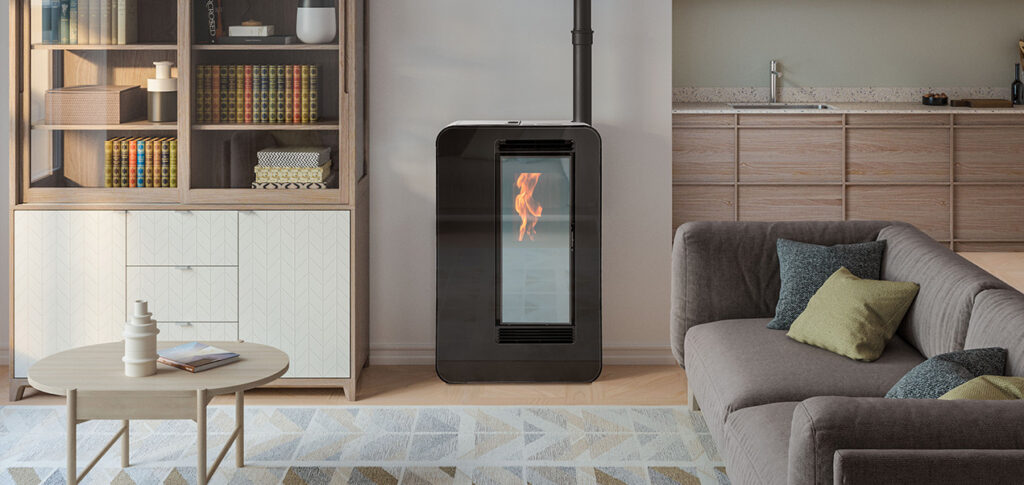
If you want a stove that makes as little noise as possible, these three air-heating models are your best options:
- Creta: A robust stove with a design that fits into any setting. Thanks to EcoSilence mode, it’s ideal for bedrooms or reading rooms.
- Miami: Compact and efficient. Perfect for those seeking cutting-edge technology and quiet operation in a compact design.
- Monaco: Elegance in the form of a stove. It offers complete control over noise levels, so you feel the warmth, not the equipment.
Causes of vibrations and unusual noises
Sometimes, the problem isn’t the stove’s design but external factors or a lack of care. If your stove is louder than usual, check the following:
| Problem | Likely cause | Solution |
| Metallic vibration | Poorly fitted panels or loose screws. | Check and tighten the screws on the outer casing. |
| High-pitched hum | Dirty fan or ash buildup. | Thorough fan cleaning (requires a service technician). |
| Vibration on the floor | The stove is not properly level. | Adjust the leveling feet so the stove sits evenly. |
| Loud noise when pellets drop | Warped or very dirty burner. | Clean the ash pan and check that it is properly seated. |
Tips for a quieter stove
- Pellet quality: Poor-quality or dusty pellets can put extra strain on the auger and cause the fans to get dirty faster, increasing noise over time. Always use ENplus A1 pellets.
- Annual maintenance: A clean stove is a quiet stove. Residue buildup can unbalance the fan blades, causing unnecessary noise.
- Intelligent power adjustment: Let the stove run automatically. When it reaches the desired temperature, it will reduce its output on its own, dramatically lowering the noise level.
Ultimately, modern pellet stoves are nothing like the noisy models of a decade ago. With Ecoforest’s EcoSilence range, the only sound you’ll want to hear is the crackle of the fire (which, let’s admit it, is quite relaxing).
