
 Ground-source heat pump
 Air-source heat pump
 Accessories
 What is a heat pump

 Air stoves
 Pellet boilers
 Ducted air stoves
 Hydro stoves
 Accessories
 Insert pellet stoves
 Wood stoves
  Wood boilers
 Insert wood stoves
 Charcoal oven




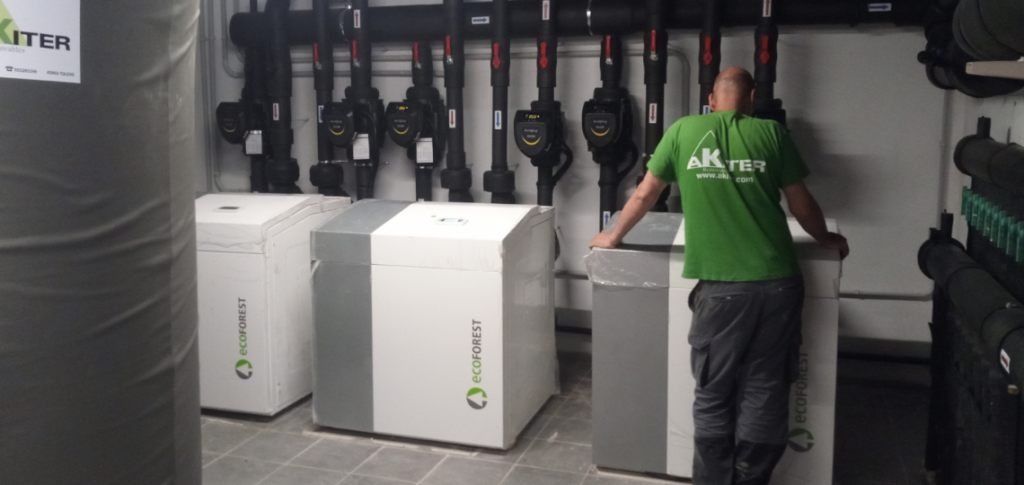
Quick answer: Geothermal energy uses the stable temperature of the ground—around 10-18 °C throughout the year in Spain—to heat and cool buildings. A network of buried pipes collects this heat through a fluid, and a geothermal heat pump raises it to a useful temperature for heating, cooling and hot water. For every kWh of electricity consumed, the system delivers between 4 and 5 kWh of thermal energy.
What geothermal energy is and where it comes from
Geothermal energy makes use of heat stored in the ground. A few metres below the surface, the earth acts like an enormous thermal battery: it stores energy from the sun and maintains a practically constant temperature throughout the year, unaffected by changes in the weather above ground.
It is important to distinguish between two uses:
- Shallow or very low-temperature geothermal energy, which is used to heat and cool homes and buildings. This is the subject of this guide.
- Deep or high-temperature geothermal energy, which uses heat from deposits deep underground to generate electricity in geothermal power plants.
In homes and light industrial settings, when we talk about how geothermal energy works, we are almost always referring to the first type: systems that combine a buried heat exchanger with a geothermal heat pump.
The principle: the ground’s constant temperature
The key to geothermal energy is simple. While air temperatures range from below freezing in winter to over 35 °C in summer, at a depth of around 5-10 metres the ground stabilises at approximately 10-18 °C, depending on the region, and stays that way throughout the year.
That stability is what makes the system so efficient:
- In winter, the ground is much warmer than the outdoor air, so extracting heat from it requires very little energy.
- In summer, the opposite is true: the ground is cooler than the air and can absorb excess heat from the home.
Unlike an air-source heat pump, which has to work with very cold outdoor air on the days when demand is highest, a geothermal system always starts with a mild, stable temperature. This is why it performs better.
How geothermal energy works, step by step
A complete geothermal system consists of three components that work together in sequence.
1. Heat collection: the buried circuit
This is the heat exchanger that connects the system to the ground. It consists of a closed loop of buried polyethylene pipes through which a heat-transfer fluid (water mixed with antifreeze) circulates.
As this fluid flows through the ground, it absorbs heat and returns to the heat pump a few degrees warmer. It is a continuous, closed cycle: the same fluid circulates again and again without being consumed.
2. The geothermal heat pump
This is the heart of the system. It receives heat from the ground at a low temperature and concentrates it to a useful level through a four-stage thermodynamic cycle:
- Evaporator. The heat carried by the fluid from the ground causes a low-pressure refrigerant to evaporate.
- Compressor. It compresses this gas, sharply increasing its pressure and, with it, its temperature.
- Condenser. The hot refrigerant transfers its heat to the home’s heating or hot-water circuit and condenses.
- Expansion valve. The refrigerant loses pressure and temperature, then returns to the evaporator to restart the cycle.
The compressor is the only component with significant electricity consumption. Because most of the energy comes from the ground at no cost, the system is highly efficient.
3. Distribution throughout the home
The heat generated is distributed through the heat delivery system: underfloor heating (the most efficient option because it operates at a low temperature), fan coils or low-temperature radiators. The same unit can produce domestic hot water and, in summer, reverse the cycle to provide cooling.
Types of geothermal heat collection
Not all ground conditions or plots are the same. There are three main heat collection systems:
- Horizontal collection. Pipes are buried in trenches 1.5-2 metres deep, spread over a large area. This is the least expensive option to install, but it requires available land.
- Vertical collection (geothermal boreholes). Boreholes between 50 and 150 metres deep are drilled to accommodate the probes. This requires very little surface space and offers the best performance, but drilling costs are higher.
- Groundwater collection (open-loop system). This uses water from an aquifer directly as a heat source. It is highly efficient where the resource is available.
The choice depends on the available space, soil type and the building’s energy needs.
Geothermal energy for heating, cooling and hot water
One of the major advantages of geothermal energy is that a single unit meets all of a home’s heating and cooling needs throughout the year:
- Heating in winter, with stable performance even on the coldest nights.
- Cooling in summer, by reversing the cycle or using passive cooling (taking direct advantage of the ground’s cooler temperature, with minimal energy consumption).
- Domestic hot water throughout the year.
This eliminates the need for a separate boiler and air conditioner.
Why geothermal energy is so efficient
The measure of a heat pump’s performance is its COP (coefficient of performance): the ratio of thermal energy delivered to electricity consumed.
A properly sized geothermal system achieves a COP of 4 to 5 or higher. In other words, for every kWh of electricity consumed, it delivers 4 or 5 kWh of heat. There are two reasons for this: it draws on a source with a stable, mild temperature, and it does not suffer the drop in performance that air-source heat pumps experience on extremely cold days.
Over the course of a year, this efficiency translates into significant savings compared with conventional gas, oil or electric systems, as well as very low emissions.
Geothermal energy with Ecoforest: the ecoGEO range
Ecoforest is the only Spanish manufacturer of geothermal heat pumps. Its ecoGEO range incorporates inverter technology: the compressor adjusts its output to match the home’s actual demand at any given moment, rather than running at full capacity and then stopping. This results in even greater efficiency and a longer service life for the unit.
In addition, HTR (superheater) technology makes it possible to produce domestic hot water at up to 80 °C efficiently, while the Ecoforest Home app, with Easynet technology, monitors and optimises the system in real time.
Discover the ecoGEO range of geothermal heat pumps
Frequently asked questions about how geothermal energy works
Does geothermal energy work on any type of land? In most cases, yes. What varies is the most suitable type of heat collection (horizontal, vertical or groundwater). A preliminary ground survey determines the best solution.
Does it use a lot of electricity? It uses electricity, but very little relative to the heat it produces. With a COP of 4-5, around 75-80 % of the energy it delivers comes from the ground at no cost; only the remainder comes from electricity.
Can geothermal energy also provide cooling in summer? Yes. The system can reverse its cycle or use passive cooling to keep the home comfortable in summer with very low energy consumption.
How long does a geothermal installation last? The buried heat collection circuit has a service life of several decades (50 years or more), while the heat pump lasts around 20-25 years with minimal maintenance.
What is the difference between geothermal energy and air-source heat pump technology? Both use heat pumps. An air-source system draws heat from the outdoor air, while a geothermal system draws it from the ground. Because it starts with a more stable temperature, the geothermal system offers higher and more consistent performance, especially in cold climates.
