
 Ground-source heat pump
 Air-source heat pump
 Accessories
 What is a heat pump

 Air stoves
 Pellet boilers
 Ducted air stoves
 Hydro stoves
 Accessories
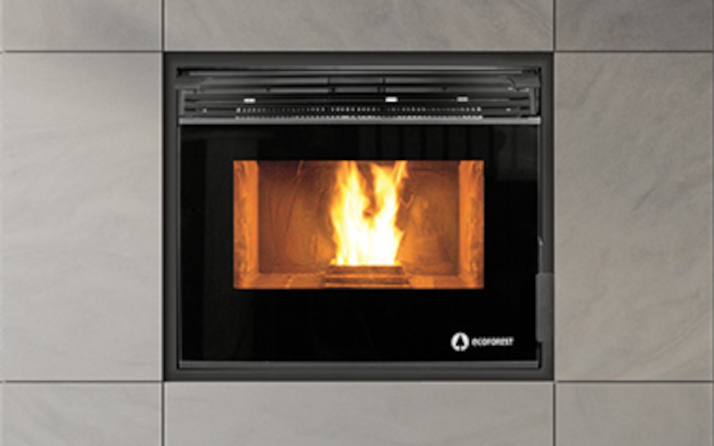 Insert pellet stoves
 Wood stoves
  Wood boilers
 Insert wood stoves
 Charcoal oven




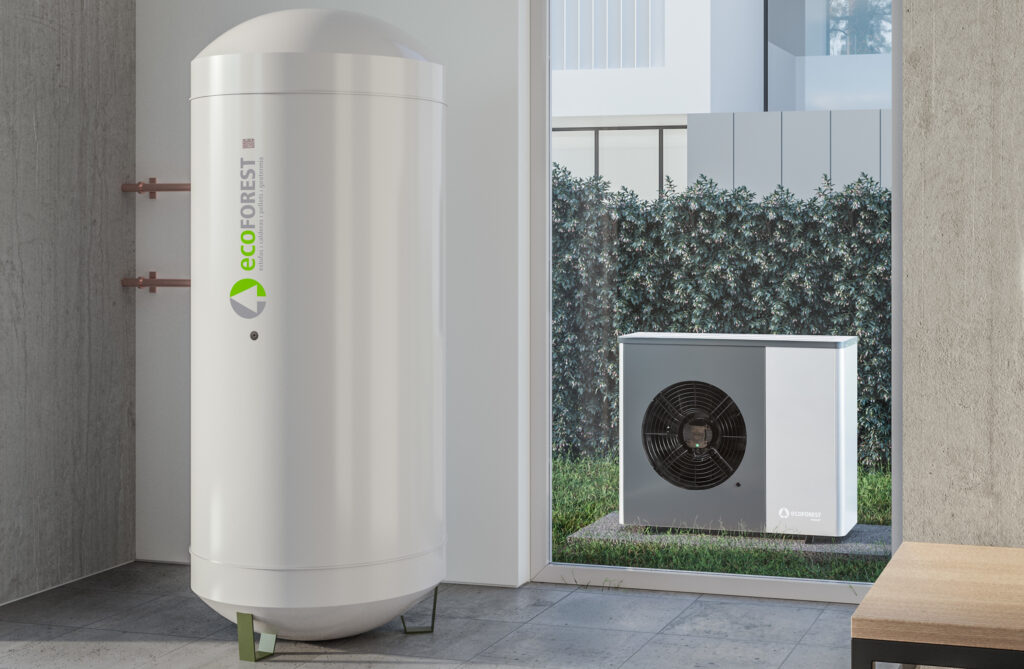
Do you have solar panels but feel like you’re giving energy away to the grid? It’s the dilemma facing today’s solar power users: your panels produce the most electricity at midday, when you may not be home. That’s where photovoltaic surplus management comes in—a strategy that turns your solar installation into a powerful way to save money.
At Ecoforest, we don’t see the water tank as simply a tank, but as a “thermal battery” capable of storing surplus electricity in the form of heat. Below, we explain how to configure your system to achieve the much-desired “Zero Bill”.
1. The concept of thermal storage: Beyond lithium batteries
Although electrical batteries are excellent, storing heat in water is one of the most economical and durable ways to manage energy. By using an Ecoforest heat pump, you can turn surplus electricity into domestic hot water (DHW) or heating for when the sun goes down.
- No degradation: Unlike chemical batteries, a water tank does not lose capacity over the years.
- Zero balance: The goal is for solar production and heat pump consumption to balance each other in real time.
2. The brains of the operation: The ecoSMART ecosystem
For your heat pump to “know” there is plenty of sunshine, you need an intelligent energy manager. Ecoforest has developed the ecoSMART range, designed specifically for photovoltaic integration.
ecoSMART e-manager
This patented energy manager monitors the balance between the electricity your panels produce and your home’s consumption.
- Real-time management: It measures the energy balance and adjusts the heat pump’s settings so it consumes only the surplus electricity from your panels.
- Surplus control: It allows temperature setpoints to be raised when the sun is shining, “filling” your tank with free thermal energy.
ecoSMART e-system
If you also want electrical storage, this system integrates a solar inverter and modular lithium batteries (from 2.4 to 12 kWh) that work in harmony with thermal management.
3. HTR technology: Store more energy in the same space
One of Ecoforest’s key differentiators is HTR (High Temperature Recovery) technology. This high-temperature heat recovery unit uses the refrigerant gas leaving the compressor to heat water without the need for additional electric heating elements.
Why is this important for surplus electricity?
- Up to 80°C: While other systems stop at lower temperatures, HTR technology can heat DHW to 70–80°C using surplus electricity.
- Free hot water in summer: While the heat pump cools your home, the HTR system produces hot water at the same time, at virtually no additional cost.
4. Recommended configuration for your equipment
Whether you have chosen an air-source heat pump or a ground-source heat pump, configuration is intuitive thanks to the ecoSMART easynet module, which enables remote control via the internet.
| Ecoforest Equipment | Photovoltaic Advantage | Natural Refrigerant |
| ecoAIR+ PRO Range | Ideal for integration, with supply temperatures up to 70°C. | R290 (GWP=3). |
| ecoGEO+ PRO Range | Maximum efficiency and stable ground temperatures. | R290 (GWP=3). |
| ecoTHERMO PRO | Dedicated exclusively to DHW, with integrated photovoltaic compatibility. | R290 (GWP=3). |
5. Steps to optimize your “thermal battery”
- Install an e-manager: It is the essential component that enables the heat pump and solar panels to communicate.
- Set surplus electricity setpoints: Configure your heat pump so that, when it detects surplus solar electricity, it raises the DHW temperature from the usual 45°C to 60°C or higher.
- Prioritize DHW: Hot water is the most efficient way to store energy quickly.
- Monitor with easynet: Check from your phone how your electricity bill falls dramatically as you optimize your use of solar energy.
