
 Ground-source heat pump
 Air-source heat pump
 Accessories
 What is a heat pump

 Air stoves
 Pellet boilers
 Ducted air stoves
 Hydro stoves
 Accessories
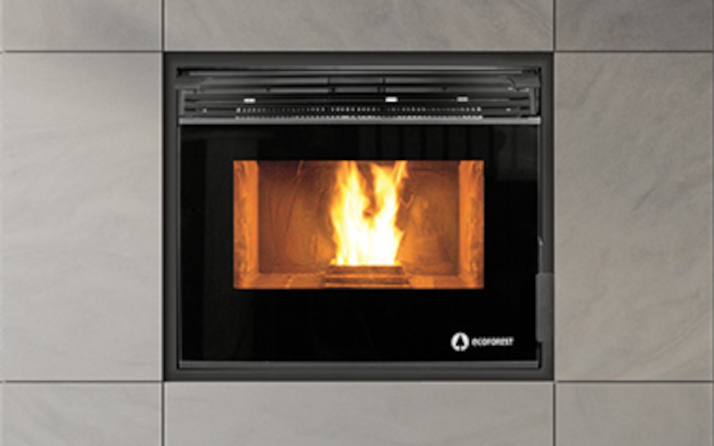 Insert pellet stoves
 Wood stoves
  Wood boilers
 Insert wood stoves
 Charcoal oven




Combining a pellet boiler with underfloor heating is one of the most efficient, sustainable and comfortable heating solutions you can install in your home. In this complete guide, we explain how it works, its benefits, how much it costs, which regulations you must comply with and how to choose the best pellets to maximise your system’s performance.
What is a pellet boiler for underfloor heating?
A pellet boiler for underfloor heating is a heating system that combines:
- A biomass boiler fuelled by pellets (an eco-friendly fuel made from compressed wood).
- A network of pipes installed beneath the floor through which hot water circulates (usually at 35–45 °C).
- Even heat distribution from the floor upwards, providing thermal comfort without visible radiators.
This system is ideal for detached houses, new builds or comprehensive renovations where energy efficiency, sustainability and maximum comfort are priorities.
Why choose a pellet boiler for underfloor heating?

1) Superior energy efficiency
Underfloor heating operates at a low temperature (35–45 °C compared with 60–80 °C for traditional radiators), allowing the pellet boiler to operate within its optimal efficiency range (up to 92–95%).
- Lower pellet consumption per hour.
- Maximum use of the fuel’s calorific value.
- Fewer on/off cycles → longer boiler life.
2) Unrivalled thermal comfort
- Even heat throughout the room, with no cold spots.
- A comfortable feeling of warmth from the floor (ideal for children and older people).
- No draughts or fan noise.
3) Sustainability and lower emissions
- ENplus A1-certified pellets are a renewable, carbon-neutral fuel.
- They come from untreated wood waste (sawdust and wood shavings).
- Minimal emissions compared with heating oil, gas or direct electric heating.
4) Long-term savings
- Pellet cost: 0,35–0,40 €/kg (2025), more stable and economical than gas or heating oil.
- Lower energy consumption thanks to the low operating temperature.
- The investment pays for itself in 5–10 years, depending on usage and available financial support.
5) More space and a clean look
- No radiators on the walls → more usable space for furniture.
- An invisible installation integrated into the floor.
How does a pellet boiler with underfloor heating work?

Step 1: Heat generation in the boiler
The pellet boiler burns fuel automatically and in a controlled manner, heating the water in the hydraulic circuit.
Step 2: Buffer tank (recommended)
A buffer tank stores hot water and stabilises the temperature, preventing the boiler from operating in short cycles. This improves efficiency and extends the equipment’s lifespan.
Step 3: Distribution through manifolds
Hot water is distributed through a manifold that regulates the flow to each underfloor heating pipe circuit (by room or zone).
Step 4: Heat emission from the floor
The pipes (usually made of cross-linked polyethylene) heat the floor, which acts as a radiant emitter, distributing heat evenly upwards.
Benefits of installing a pellet boiler for underfloor heating
✔ High energy efficiency: boiler efficiency of 90–95% + low-temperature operation.
✔ Superior comfort: even heat, with no draughts.
✔ Sustainability: renewable, carbon-neutral fuel.
✔ Cost savings: pellets are cheaper than gas, heating oil or electricity.
✔ More space: no visible radiators.
✔ Versatility: it can also produce domestic hot water (DHW).
✔ Compatible with solar energy: it can be integrated with solar thermal panels for greater savings.
Disadvantages and considerations
- High initial investment: equipment + underfloor heating installation + building work.
- Space required: for the boiler, pellet storage and buffer tank.
- Thermal inertia: underfloor heating takes longer to heat up and cool down (not suitable for occasional use).
- Maintenance: annual boiler cleaning and inspection of the hydraulic circuit.
- Regulations: compliance with UNE-EN 14785, a flue outlet at roof level and an outside air intake.
Estimated total cost (120 m² home)
- Boiler + tanks + underfloor heating installation: 12.000–22.000 €
- With grants and subsidies: the cost may be reduced by 30–50%, depending on the autonomous community.
💡 Ecoforest tip: request a detailed quote that includes the boiler, buffer tank, underfloor heating installation, building work and commissioning.
Consumption and monthly costs with a pellet boiler for underfloor heating
Typical consumption (well-insulated 120 m² home)
- Average heat demand: 8–12 kW
- Pellet consumption: 1,5–2,5 kg/h during high demand; 0,8–1,2 kg/h when modulating.
- Operating hours: 6–8 h/day in winter.
Estimated monthly cost
| Usage | Monthly consumption | Cost (ENplus A1 pellets at 0,37 €/kg) |
|---|---|---|
| Moderate (150 kg/month) | 150 kg | 55–60 €/month |
| Heavy (250 kg/month) | 250 kg | 90–100 €/month |
Boiler electricity consumption: 0,05–0,15 €/day (hydraulic pump, ignition, controls).
Which pellets should you use for an underfloor heating boiler?
Pellet quality is essential to the boiler’s performance, cleanliness and lifespan.
Pellet classifications
| Class | Source | Ash | Chlorine | Nitrogen | Recommended use |
|---|---|---|---|---|---|
| ENplus A1 | Untreated virgin wood | <0,7% | <0,02% | <0,3% | Domestic boilers (recommended) |
| ENplus A2 | Untreated wood from felling | <1,2% | <0,02% | <0,5% | Domestic boilers |
| B | Recycled or treated wood | <2% | <0,03% | <1% | Industrial boilers |
✅ Ecoforest recommendation: always use ENplus A1 pellets to maximise performance, reduce ash and extend the boiler’s lifespan.
Alternative biofuels for underfloor heating
Although pellets are the most recommended option, there are alternatives:
Wood chips
- Advantage: cheaper (0,10–0,15 €/kg).
- Disadvantage: higher moisture content, more storage space and more frequent cleaning.
- Use: high-capacity installations (industrial buildings, public buildings).
Olive pits
- Advantage: very economical in Andalusia and Extremadura (0,22–0,28 €/kg).
- Disadvantage: more ash and clinker; requires adapted boilers.
- Use: producing regions with multi-fuel boilers.
💡 For detached houses with underfloor heating, ENplus A1 pellets remain the best option for cleanliness, performance and consistency.
Installation regulations in Spain (2025)
- UNE-EN 14785: European standard for domestic pellet boilers.
- Flue outlet: a roof-level outlet with an insulated, double-wall stainless steel flue is mandatory.
- Outside air intake: recommended for stable combustion.
- Buffer tank: not mandatory, but highly recommended for efficiency.
- Regional and municipal regulations: check local rules on flue outlets and notification of building work.
Maintaining a pellet boiler for underfloor heating
User tasks (weekly)
- Empty the ash pan.
- Clean the glass (if it has a viewing window).
- Check the pellet level in the hopper.
Annual professional servicing
- Thorough cleaning of heat exchangers, fans and ducts.
- Inspection of seals, sensors and the ignition system.
- Checking the hydraulic circuit and system pressure.
- Cost: 120–200 €/year.
When should you choose a pellet boiler for underfloor heating?
✅ Choose this system if:
- You are building a home or carrying out a comprehensive renovation.
- You want maximum efficiency and thermal comfort.
- You want a sustainable solution with low running costs.
- You have space for a boiler, pellet storage and a buffer tank.
- You can afford the initial investment (with or without financial support).
❌ It is not the best option if:
- You need heating only occasionally (a holiday home used infrequently).
- You do not have space to store pellets.
- You want a solution that can be installed quickly without building work.
Grants and subsidies in Spain (2025)
Many autonomous communities offer financial support for installing biomass boilers:
- Incentive programme for self-consumption and storage (IDAE).
- Regional grants for energy-efficiency renovations.
- Tax deductions for energy-efficiency improvements.
💡 Ask your authorised installer or check your autonomous community’s website for details of current financial support.
Conclusion
A pellet boiler for underfloor heating is the perfect combination for anyone seeking efficiency, comfort and sustainability at home. Although the initial investment is high, the energy savings, thermal comfort and lower emissions more than make up for it in the medium and long term.
To make the right choices for your installation:
✔ Choose a high-quality, efficient pellet boiler.
✔ Install a buffer tank to maximise efficiency.
✔ Always use ENplus A1 pellets.
✔ Comply with flue regulations and outside air intake requirements.
✔ Arrange annual maintenance to extend the system’s lifespan.
Discover the full range of Ecoforest pellet boilers and stoves and take the step towards efficient, sustainable heating that is ready for the future.
