
 Ground-source heat pump
 Air-source heat pump
 Accessories
 What is a heat pump

 Air stoves
 Pellet boilers
 Ducted air stoves
 Hydro stoves
 Accessories
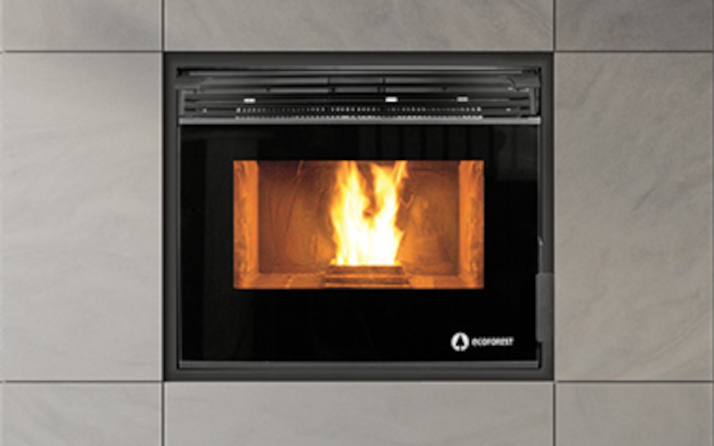 Insert pellet stoves
 Wood stoves
  Wood boilers
 Insert wood stoves
 Charcoal oven



Aerothermal energy is one of the most efficient and sustainable alternatives for collective air conditioning in residential buildings. Its implementation in neighbourhood communities is booming in 2025 thanks to new public subsidies, legislative changes and technological improvements. How does this centralised system work, what benefits does it offer and when is it worth investing in? We explain everything in detail.
How does collective aerothermal energy work in communities?
In a community of neighbours, aerothermal energy consists of installing one or more central heat pumps that extract thermal energy from the outside air. This heat is distributed through a centralised heating/cooling circuit to all homes and common areas, allowing for:
- Heating in winter and cooling in summer
- Distributed domestic hot water
- Individual meters or distribution by coefficients for fair billing
The system can be easily combined with underfloor heating, fan coils or low-temperature radiators, adapting to new buildings or renovations of old centralised installations (gas or oil boilers).
Key advantages for the community
- Energy savings and efficiency: For every kWh of electricity consumed, the heat pump generates between 3 and 4.5 kWh of heat. This translates into savings of 55-70% compared to gas or oil, resulting in a significant reduction in each resident’s monthly energy bill.
- Drastic reduction in emissions: Aerothermal energy has no local CO₂ emissions and more than meets the requirements of the new CTE (Technical Building Code) and the Integrated National Energy and Climate Plan.
- Increased property value: Better energy rating and higher market value for homes.
- Minimal maintenance: Requires fewer inspections and generates fewer breakdowns than a communal boiler.
- Total comfort: Central air conditioning controllable per home, with the option of individual metering.
Changes in legislation and public subsidies in 2025
The big news this year is the regulatory and fiscal boost for collective aerothermal energy.
- New Royal Decree-Law 7/2025: Now only one-third of the votes at the owners’ meeting are required to approve the switch to renewable systems, simplifying the decision-making process.
- Tax breaks: Many local councils in Spain offer up to 50% off property tax and up to 95% off construction tax for communities that install centralised aerothermal systems.
- Income tax deductions: Neighbourhood communities can deduct 40% to 60% of the investment if energy improvements are achieved (classification A or B). This is compatible with regional aid and the Plan Cambia 360 in cities such as Madrid, where collective subsidies can cover up to 70% of the cost.
- Next Generation Funds: European programmes in force during 2025 that channel direct technological aid per dwelling or per kWh installed.
When is collective aerothermal energy profitable?
The actual profitability depends on the overall investment, the size of the building and the previous system:
- In buildings with old centralised installations (gas, oil, coal or direct electric boilers), the savings are immediate. The usual return on investment is between 4 and 7 years, well before the end of the subsidies.
- In communities with individual heating, it can be profitable if a comprehensive renovation is planned, especially combining aerothermal energy with photovoltaic installation or insulation.
- Potential savings: For a community of 20 homes, annual expenditure can be reduced from £25,000 (diesel) to £8,500-9,800 (central aerothermal energy), as well as reducing breakdowns, managing common areas and adding value to the property.
Real cases and trends in 2025
- Madrid and metropolitan area: Dozens of communities have already replaced their boilers with centralised heat pumps, achieving significant savings. Institutional support and the ease of the process have triggered a surge in demand.
- New buildings and Passivhaus: Virtually all new developments now opt for hybrid systems (aerothermal + solar) due to their high efficiency and compliance with regulations.
- Rural communities and small towns: Particularly profitable if there is the possibility of combining with photovoltaic self-consumption.
Conclusion: the best collective investment for 2030
Centralised aerothermal energy is the benchmark option for residential buildings that want to save money, increase the value of their property and decarbonise before 2030. Thanks to updated regulations and tax and economic incentives, the investment is now much more accessible and profitable. Always choose certified installers and request your personalised energy study to qualify for all available subsidies.
Would you like more information or to receive a free study for your community? Check out Ecoforest’s resources and our expert team will advise you throughout the process.
