
 Ground-source heat pump
 Air-source heat pump
 Accessories
 What is a heat pump

 Air stoves
 Pellet boilers
 Ducted air stoves
 Hydro stoves
 Accessories
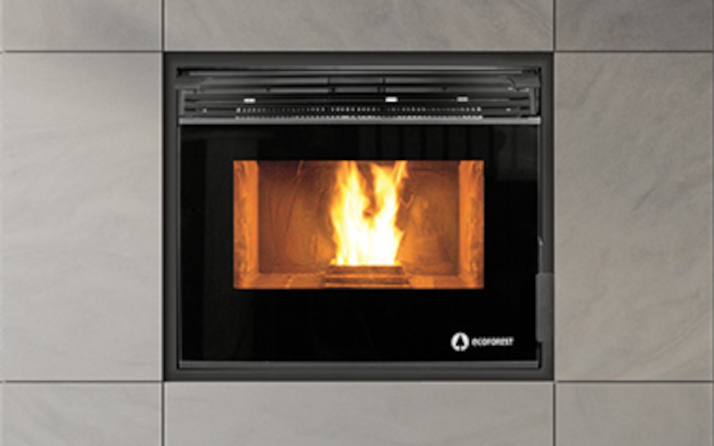 Insert pellet stoves
 Wood stoves
  Wood boilers
 Insert wood stoves
 Charcoal oven




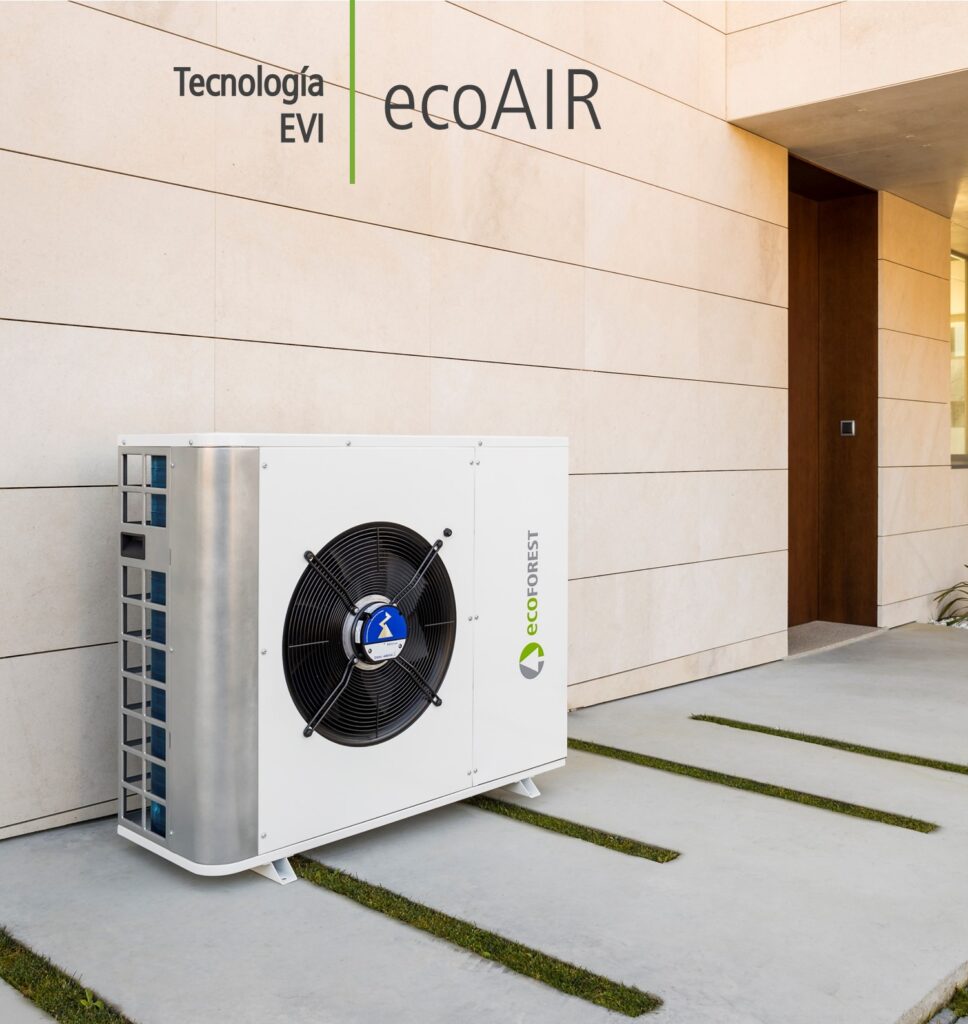
One of the most common concerns when considering an air-source heat pump is whether it can heat existing radiators. The short answer is yes, but there are technical considerations worth understanding before accepting a quote. In this article, we break down the physics of the problem, the flow temperature aluminum radiators require, and which models in Ecoforest’s ecoAIR⁺ range are equipped for the job.
The crux of the problem: flow temperature vs. the emitter’s design temperature
Every heating system is designed for a flow temperature (Timp) and a return temperature (Tret). Traditional gas boiler systems operate at Timp = 70–80 °C. Air-source heat pumps are more efficient at lower temperatures: their COP (Coefficient of Performance) ranges from 4–5 at a flow temperature of 35 °C and falls to around 2.5–3 when they are required to exceed 55 °C.
This is where the type of heat emitter matters. A cast-iron radiator sized for 75/65 °C cannot perform well at 45 °C: it simply does not emit enough heat. A low-profile aluminum radiator, however, can deliver the same heat output at flow temperatures between 45 °C and 55 °C thanks to its larger heat-exchange surface and better thermal conductivity — the optimal operating range for most modern heat pumps.
Why does aluminum change the equation?
Aluminum’s thermal conductivity (~237 W/m·K) is approximately ten times that of conventional steel and twenty times that of cast iron. This has two practical consequences:
- Larger effective heat-emitting surface: heat is distributed more evenly across the radiator’s entire fin.
- Lower thermal inertia: the system responds more quickly to changes in demand, something the Inverter technology in ecoAIR⁺ heat pumps takes full advantage of.
The result is that a correctly sized aluminum radiator can achieve its rated design output with a Timp of 45–55 °C, while a cast-iron equivalent would need 70–75 °C for the same room. That 20–25 °C difference in flow temperature translates directly into a COP up to 30–40% higher for the heat pump.
The flow temperature you need: a guide
| Type of heat emitter | Required flow temperature | Compatible with standard air-source heat pumps | Estimated ecoAIR⁺ COP |
|---|---|---|---|
| Underfloor heating | 30–40 °C | ✅ Optimal | 4.5–5.0 |
| Fan coil | 40–45 °C | ✅ Very good | 4.0–4.5 |
| Aluminum radiator (low-profile) | 45–55 °C | ✅ Good with EVI or HTR | 3.0–3.5 |
| Conventional steel/cast-iron radiator | 65–80 °C | ⚠️ Only with HTR (higher consumption) | 2.0–2.5 |
Indicative values for outdoor conditions of 7 °C according to EN 14825. Actual COP depends on insulation, weather conditions, and system sizing.
EVI technology: the bridge between air-source heat pumps and radiators
For systems with aluminum radiators requiring flow temperatures of up to 55–60 °C, Ecoforest incorporates EVI (Enhanced Vapor Injection) technology into the ecoAIR⁺ EVI 4-20 model. EVI injects medium-pressure refrigerant vapor directly into the SCROLL compressor, increasing heating capacity when the temperature difference is large and allowing the system to reach flow temperatures that a conventional refrigeration cycle could not maintain efficiently.
The ecoAIR⁺ EVI 4-20 uses natural R290 refrigerant (propane), positioning it to comply with European F-Gas regulations over the long term and reducing the system’s environmental impact.
HTR: High temperatures for the most demanding applications
When the radiators cannot be resized and the system requires flow temperatures above 60 °C (or direct domestic hot water up to 80 °C without an auxiliary electric heater), Ecoforest has developed HTR (High Temperature Range) technology. It is the first air-source
heat pump to reach a flow temperature of 80 °C without additional energy consumption, a milestone that makes energy retrofits possible without
having to replace existing radiators.
For systems with medium- to high-profile aluminum radiators and a Timp between 55 and 65 °C, this technology maintains a competitive COP where other products on the market already rely on electric resistance heating, driving up consumption.
Recommended Ecoforest models for systems with aluminum radiators
The Ecoforest ecoAIR⁺ range covers 7 to 24 kW in a monobloc configuration, allowing the system to be sized correctly without oversizing it (a critical factor in keeping COP high):
- ecoAIR⁺ 1-7 PRO — Monobloc, natural refrigerant, Inverter technology. For homes of up to ~100 m² with correctly sized low-profile aluminum radiators.
- ecoAIR⁺ 1-9 PRO — Inverter + SCROLL compressor. Ideal for 100–130 m² homes with aluminum heat emitters and moderate insulation.
- ecoAIR⁺ 3-12 PRO / 3-18 PRO — For homes of 130–200 m² or those with higher demand due to poorer insulation. The 3-18 PRO is particularly suitable if a high Timp is expected.
- ecoAIR⁺ EVI 4-20 — The most technically robust option for systems with aluminum radiators requiring Timp ≥ 50 °C. EVI injection ensures stability and efficiency under these conditions.
- ecoAIR⁺ 6-24 PRO — For large homes or small buildings. R290, Inverter, and SCROLL. Consult an authorized installer about compatibility with existing radiators.
All ecoAIR⁺ models feature Copeland Inverter technology, with Ecoforest being the first manufacturer to introduce it across its range. This allows the compressor to continuously adjust its speed, matching output precisely to demand at any given moment — key to avoiding short cycling when aluminum radiators respond quickly to temperature changes.
Checks to make before installation
Air-source heat pumps with aluminum radiators are technically viable, but the installer must first check:
- Radiator sizing: if the original system was designed for 75/65 °C, the heat-emitting surface will need to be increased (with more sections per radiator) to operate properly at 50/40 °C. As a guide, reducing the flow temperature from 75 °C to 50 °C may require 1.5 to 2 times as much heat-emitting surface.
- Home insulation: the lower the energy demand per m², the lower the Timp required. A properly insulated home can operate perfectly well at 45 °C even when outdoor temperatures reach -5 °C.
- Bleeding the circuit: mixed systems (combining aluminum and steel) are at risk of galvanic corrosion. Inhibitor additives and, where appropriate, hydraulic separators are essential.
- Thermostatic valves: room-by-room control with thermostatic radiator valves improves overall COP by reducing the Timp required outside peak hours.
For more details on installation in existing homes, see our article on how to install an air-source heat pump in an existing home.
How much can I save with an air-source heat pump compared with a gas boiler using the same radiators?
With a Timp of 50 °C and a seasonal COP of 3.0 in Spain’s average climate zone, an air-source heat pump consumes one-third of the final energy
that a gas boiler would consume (effective COP = 0.85–0.90). Even with the current electricity-to-gas price difference, bill savings can
exceed 40–50% in mild climates. Find out how much you can save with an air-source heat pump in your climate zone.
Air-source heat pumps with aluminum radiators vs. underfloor heating: which is better?
Underfloor heating remains the optimal heat emitter for air-source heat pumps (Timp 30–40 °C = maximum COP), but it involves work on the floors, which is not always feasible. Low-profile aluminum radiators are the second most efficient option and make it possible to retrofit older systems at a much lower cost. If you are deciding between the two, read our comparison of radiators and underfloor heating.
Technical Specifications — ecoAIR⁺ Range
| Model | Heating capacity | Compressor technology | Refrigerant | Configuration | Distinguishing technology |
|---|---|---|---|---|---|
| ecoAIR⁺ 1-7 PRO | 7 kW | Copeland Inverter | R290 (natural) | Monobloc | — |
| ecoAIR⁺ 1-9 PRO | 9 kW | Inverter + SCROLL | R290 (natural) | Monobloc | — |
| ecoAIR⁺ 3-12 PRO | 12 kW | Inverter + SCROLL | R290 (natural) | Monobloc | — |
| ecoAIR⁺ 3-18 PRO | 18 kW | Inverter + SCROLL | R290 (natural) | Monobloc | — |
| ecoAIR⁺ EVI 4-20 | 20 kW | Inverter + SCROLL | R290 (natural) | Monobloc | EVI (high flow temperature) |
| ecoAIR⁺ 6-24 PRO | 24 kW | Inverter + SCROLL | R290 (natural) | Monobloc | — |
Source: official Ecoforest technical documentation. COP according to EN 14825. All models provide cooling and heating simultaneously and can be integrated with domestic hot water production.
Conclusion
Using an air-source heat pump with aluminum radiators is not a technical compromise; it is a perfectly viable combination when the system is
correctly sized. The key is the flow temperature: 45–55 °C is the operating range where low-profile aluminum radiators and the ecoAIR⁺ range meet to offer the best balance of comfort and energy efficiency. For systems with greater heating requirements, the EVI technology in the ecoAIR⁺ EVI 4-20 or HTR technology are Ecoforest’s engineering solutions to the challenge of replacing gas boilers without changing the heat emitters.
If you want to learn more about how air-source heat pumps work with different heating systems, read our complete guide to heat pumps or discover the 5 reasons to install an air-source heat pump in your home.
