
 Ground-source heat pump
 Air-source heat pump
 Accessories
 What is a heat pump

 Air stoves
 Pellet boilers
 Ducted air stoves
 Hydro stoves
 Accessories
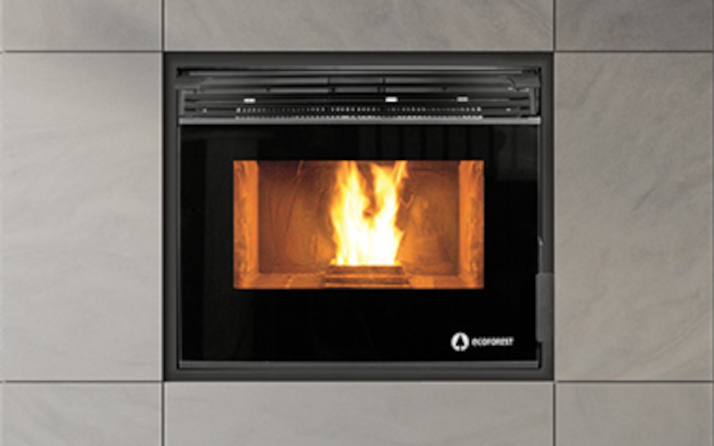 Insert pellet stoves
 Wood stoves
  Wood boilers
 Insert wood stoves
 Charcoal oven





The energy transition at home is not just a matter of environmental awareness; today, it is a strategic financial decision. If you live in a detached home of around 150m² and rely on an oil boiler, you have probably noticed how volatile fossil fuel prices affect your household finances.
At Ecoforest, European pioneers in the manufacture of pellet stoves since 1992, we have analysed real-world data to offer you a detailed payback plan. Is making the switch worthwhile? Let’s break it down.
1. The starting point: Heating oil vs. pellet consumption
To heat a 150m² home with average insulation in a typical climate zone, annual energy demand is around 15,000 – 18,000 kWh.
- Heating oil: A conventional oil boiler has an efficiency of between 80% and 85%. Meeting that demand requires approximately 1,800 to 2,000 litres of fuel per year.
- Pellets: Ecoforest pellet boilers, such as the Vap range or the compact Cantina, achieve efficiencies of over 90-95%. Thanks to the high calorific value of pellets (approx. 5 kWh/kg), you would need around 3,600 to 4,000 kg of pellets per year.
2. Annual cost comparison (market prices)
| Item | Heating Oil | Pellets | Annual Savings |
| Unit price | ~€1.15 / litre | ~€0.40 / kg (bulk/pallet) | – |
| Annual cost | €2,185 | €1,520 | €665 (minimum) |
Note: These prices are estimates and depend on market fluctuations. Historically, however, pellet prices have remained much more stable than those of petroleum products.
3. The initial investment: How much does the switch cost?
Replacing an oil boiler with a biomass boiler requires an initial investment covering the equipment and installation (adapting the flue and connecting it to the existing radiator system).
For a 150m² home, the ideal solution is often a boiler such as the Cantina Compact or a hydro pellet stove, which heats the water for the radiators while also providing direct heat to the room where it is installed.
The role of grants
Currently, thanks to EU Next Generation funds, direct grants are available for replacing fossil fuel boilers with biomass systems. These grants can cover between 35% and 50% of the total installation cost, drastically reducing the payback period.
4. Payback plan: How long will it take to recoup your investment?
If we assume a net investment (after grants) of approximately €4,500 and conservative annual savings of €700:
- Payback without grants: ~6-7 years.
- Payback with grants: ~3-4 years.
From the fourth year onwards, all the savings you make are money back in your pocket. What’s more, by installing Ecoforest equipment, you benefit from exclusive technologies such as the Vacuum Cleaning System, which reduces manual maintenance, and our own electronic control systems, which optimise fuel consumption in real time.
5. Additional benefits of switching to Ecoforest biomass
Beyond financial savings, there are technical and comfort-related reasons to choose this system:
- Energy independence: You are not dependent on international crises that affect crude oil prices. Pellets are a local, renewable fuel.
- Multi-fuel technology: Many of our units can use other fuels, such as almond shells or olive pits, allowing you to save even more if these resources are available in your area.
- Complete control: Thanks to the Ecoforest app, you can manage your home’s temperature from anywhere, optimising when the system switches on and off.
- Increased property value: Improving your home’s energy rating increases its market value.
Conclusion
Switching from heating oil to pellets in a 150m² home is one of the highest-return investments you can make in sustainable heating. With annual savings that can exceed €800 and the possibility of receiving grants, the question is not whether it pays off, but how much money you are losing each winter you keep your old oil boiler.
If you would like a personalised assessment for your home, browse our catalogue of biomass products or contact one of our official installers.
Considering an even more efficient solution? Discover how air-source heat pump technology can complement or replace your current system while also providing cooling in summer.
