
 Ground-source heat pump
 Air-source heat pump
 Accessories
 What is a heat pump

 Air stoves
 Pellet boilers
 Ducted air stoves
 Hydro stoves
 Accessories
 Insert pellet stoves
 Wood stoves
  Wood boilers
 Insert wood stoves
 Charcoal oven




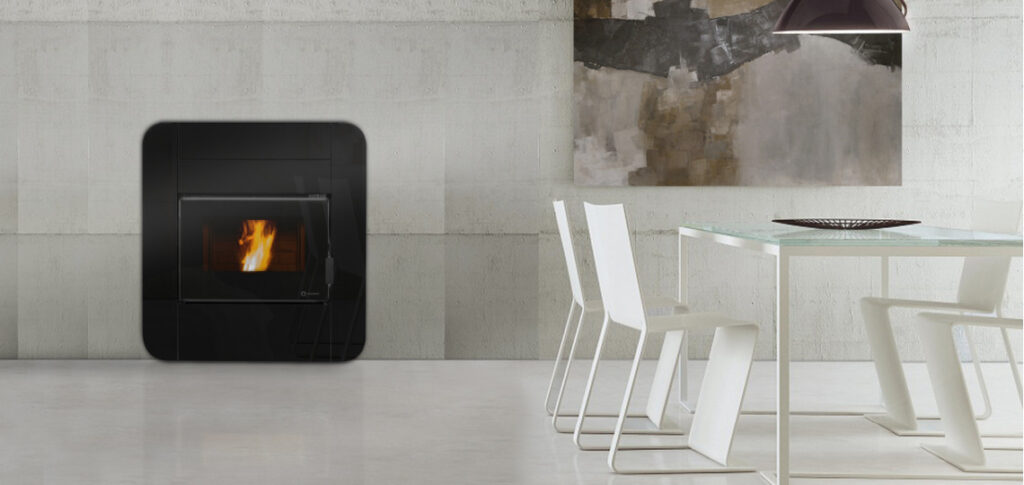
If you have radiators at home but your heating bill keeps rising because of the price of heating oil, you’re in the right place. Switching to more sustainable and affordable heating doesn’t always require a complete renovation.
Pellet hydro stoves (also called water-heating stoves) have become the ideal solution for anyone looking to use their existing radiator network while replacing an old fossil-fuel boiler with a renewable, CO2-neutral and significantly cheaper energy source.
What exactly is a pellet hydro stove?
Unlike a conventional air stove, which heats the room it is in, a hydro stove works much like a boiler. It contains a heat exchanger that heats water, which a circulation pump then distributes throughout the home’s radiator circuit.
At Ecoforest, as the pioneers who invented the pellet hydro stove in 1993, we have refined this technology to make integration virtually “plug & play”.
Benefits of replacing your oil boiler with pellets
- Cost savings: Pellets are between 30% and 50% cheaper than heating oil.
- Sustainability: You reduce your carbon footprint by using biomass, a renewable fuel.
- Use of your existing system: You don’t need to replace your aluminium or cast-iron radiators.
- Appearance and comfort: As well as heating the water, the hydro stove brings radiant heat and the visual appeal of a flame into your living room.
Installation diagram: How it connects to your radiators
To ensure an efficient replacement, it’s essential to understand the hydraulic layout. An Ecoforest hydro stove already contains most of the necessary components (circulation pump, expansion vessel and safety valve), greatly simplifying installation.
1. Direct connection to the radiators
This is the simplest configuration. The hydro stove connects to the flow and return manifolds of the old boiler.
2. Domestic hot water (DHW) production
If you also want to replace your oil boiler’s hot water supply, you can add an external DHW tank. Ecoforest’s advanced electronics will automatically control a three-way valve to prioritise hot water for the shower or heating as needed.
3. Using a buffer tank (Optional but recommended)
Installing a buffer tank is recommended to reduce the number of start-ups and extend the equipment’s service life. This allows the hydro stove to run at full power for longer, storing excess heat in the water until the radiators need it.
Steps to replace your old oil boiler
If you’ve decided to make the switch, this is the technical process a qualified installer will follow:
- Removal of the old equipment: The circuit is drained, and the oil boiler and its fuel tank are removed (freeing up valuable space in your home).
- Adaptation of the flue: Unlike oil boilers, pellet stoves require a stainless-steel flue (usually 80mm or 100mm) that ensures proper draught and complies with RITE regulations.
- Hydraulic connection: The hydro stove’s flow and return connections are linked to the radiator network. This is the ideal time to install a sludge filter to protect your new investment.
- Electronic commissioning: Ecoforest models offer WiFi control. You’ll be able to turn on the heating from your phone before you get home.
Which Ecoforest model should you choose?
Ecoforest offers a range of power outputs depending on the size of your home and the number of radiators:
- For medium-sized homes: Models such as the Hydrocopper range are ideal thanks to their high efficiency and compact design.
- For greater heating needs: If you’re looking for a purely technical solution for a plant room, the pellet boilers in the Cantina series offer outputs of up to 30kW or more, serving large radiator networks or even underfloor heating.
All our units feature the Vacuum Cleaning System, an exclusive system that automatically cleans the heat exchanger, keeping manual maintenance to a minimum.
Conclusion
Replacing an oil boiler with a pellet hydro stove isn’t just an environmentally friendly choice; it’s a smart financial investment. You keep the comfort of your familiar radiators while benefiting from 21st-century technology that helps you save from day one.
Want to know how many radiators a hydro stove can heat in your home? Contact our experts and we’ll help you design the ideal installation layout for your home.
