
 Ground-source heat pump
 Air-source heat pump
 Accessories
 What is a heat pump

 Air stoves
 Pellet boilers
 Ducted air stoves
 Hydro stoves
 Accessories
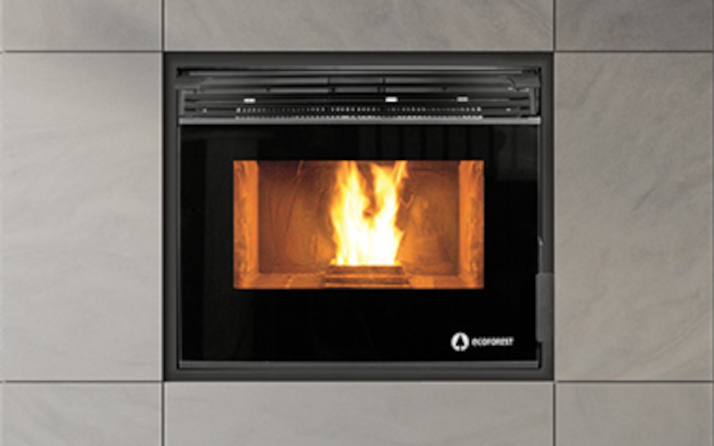 Insert pellet stoves
 Wood stoves
  Wood boilers
 Insert wood stoves
 Charcoal oven




Winter is here, and many people are looking for sustainable, efficient and economical heating alternatives.
Pellet stoves have become one of the most popular options thanks to their low environmental impact and high performance.
If you are considering investing in one, this complete guide will answer all your questions and help you make the best decision.
What are pellet stoves and how do they work?
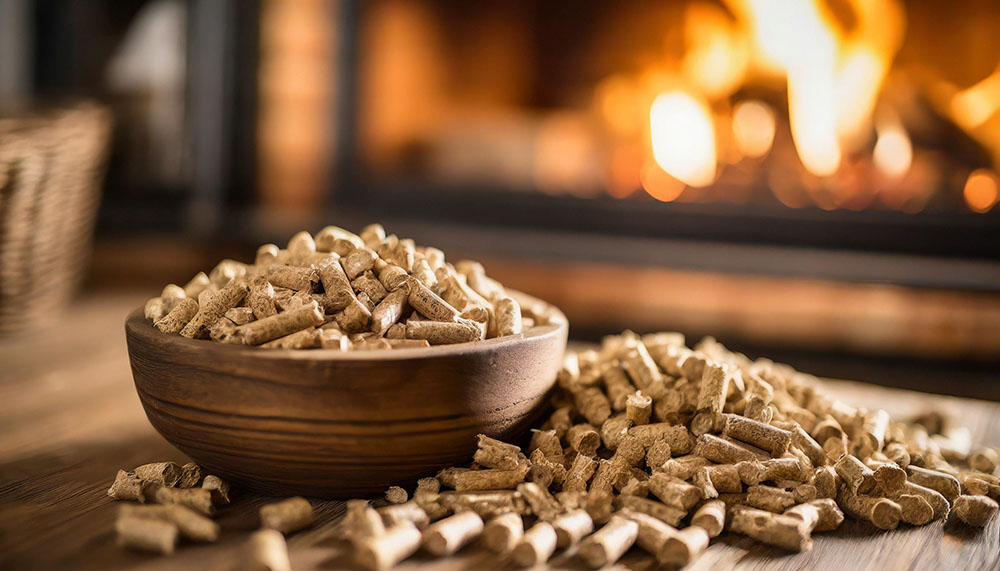

What are pellets?
Pellets are small biomass cylinders made from pressed wood waste, such as sawdust and shavings.
Their composition allows them to be a renewable, economical and efficient fuel.
In addition, their high calorific value and low CO₂ emissions make them a sustainable option for home heating.
Basic operation of a pellet stove
Pellet stoves operate automatically and easily:
- Raw material loading: pellets are fed into a tank.
- Automatic feeding: a worm screw transports them to the burner.
- Ignition: an electrical resistor initiates combustion.
- Heat generation: heat is distributed by a fan or by radiation.
- Intelligent control: thermostats and programmers adjust the power according to the needs we have set.
Types of pellet stoves: Which one is best suited to your needs?
Forced air stoves

They are the most common and distribute heat by means of a fan. They are ideal for heating one or two small rooms.
Ductable stoves

These stoves allow heat to be channeled to several rooms through ducts, making them a perfect option for medium-sized homes.
Thermo-stoves or hydro-stoves

Connected to the central heating system, they also heat domestic water. They are useful in large homes.
Pellet stoves without electrical connection
They operate without electricity, ideal for rural areas or in case of frequent power outages.
Pellet boilers
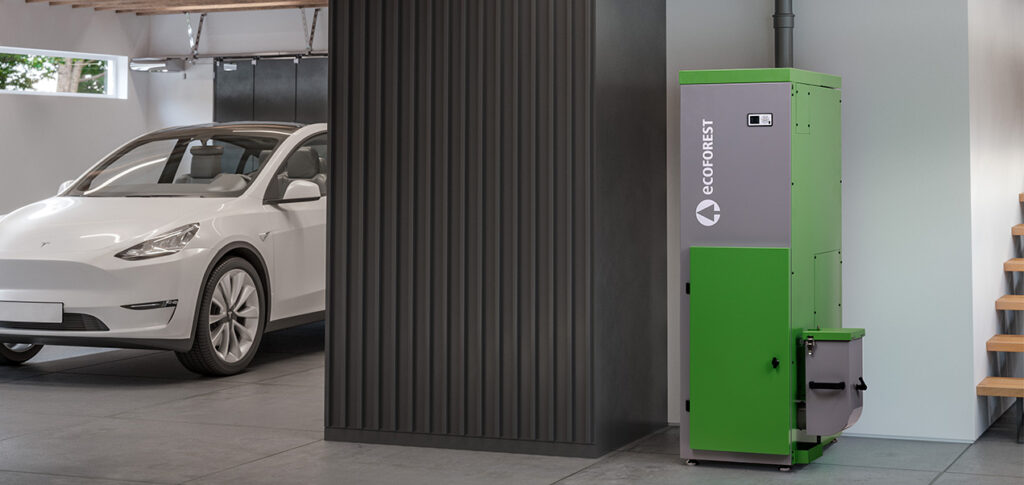
Pellet boilers are larger capacity boilers designed to replace traditional boilers in central heating systems.
Unlike stoves, these boilers can heat water for radiators, underfloor heating or mixed systems.
They are more suitable for complete dwellings or even buildings.
Although they require more space for installation, their high efficiency and autonomy make them an excellent option for large energy demands.
Key factors in choosing a pellet stove
Ideal power according to the size of your home
The first thing to keep in mind is that you must choose the right power, depending on the square meters you want to heat.
- Up to 60 m²: 6 kW.
- From 60 to 120 m²: 8-10 kW.
- More than 120 m²: 12-15 kW or more.
Smoke outlet and installation requirements
All stoves need a flue to evacuate the combustion gases.
This involves taking into account the installation of a chimney or exhaust pipe, before placing the stove.
Special functions and innovative technology
If you want to have the most versatile stove that adapts to your needs, we recommend looking for models with:
- Daily and weekly programming.
- Remote control or via app.
- Eco mode for energy saving.
Energy consumption and efficiency
Pellet stoves have an energy efficiency of 85-95%. And their consumption varies according to the power, with an average of 1 kg of pellets per hour.
You should note that this will vary depending on the time, power and space you want to heat.
Installing a pellet stove: what you need to know
Basic installation requirements
Before buying any pellet stove we recommend you to have these elements, which will be necessary for a proper installation of the stove:
- A nearby electrical outlet.
- Adequate space for smoke exhaust.
- Sufficient ventilation to ensure safety.
Is it possible to install a stove without a flue?
No. All pellet stoves need an outlet to evacuate gases, although some allow for more discreet installations.
Approximate cost of installation
The average cost is between €500 and €1,000, depending on the complexity and materials required.
Maintenance and cleaning of pellet stoves
How to clean a pellet stove correctly?
To ensure a longer service life, we recommend that you follow the steps below in maintaining your stove:
- Empty the ash pan weekly.
- Clean the glass and ducts regularly.
- Use an ash vacuum cleaner to avoid residues.
Tips for extending the life of your stove
Caring for a pellet stove to extend its service life is actually very simple.
You just have to make sure you use quality pellets, carry out periodic checks and do not overload the tank.
However, we also recommend not keeping it on for too long, to avoid overheating of the circuit.
And not to leave it on if we leave the house, unless we use the timer of a smart app.
Annual maintenance: What should you check?
In the annual maintenance of a pellet stove, a thorough cleaning of the ducts should be performed to ensure proper air flow and avoid blockages.
It is essential to check the condition of electrical components, such as resistors and sensors, making sure they are working properly.
In addition, checking the burner and flue is crucial to prevent combustion problems or residue accumulation.
Advantages and disadvantages of pellet stoves

Benefits over other heating systems
First, they use a renewable and sustainable fuel that contributes to the reduction of CO₂ emissions, making them an environmentally friendly option.
In addition, they allow significant savings compared to other systems such as electric or gas, since pellets are more economical and have a high calorific value.
They also stand out for their low daily maintenance, since they have automatic mechanisms that facilitate their use and guarantee efficient operation.
Aspects to consider before buying
On the one hand, you will need enough space to store the pellets, as they are sold in bags that take up a considerable area.
You should also consider the initial investment, which can be high compared to other heating systems, although this cost is offset by the energy savings.
Also, keep in mind that most pellet stoves rely on electricity to operate, which could be inconvenient in the event of power outages, unless you opt for models designed to operate without a power connection.
Comparison of the best pellet stoves in 2025
Featured models: pros and cons
- Ecoforest Vigo: this model stands out for its compact design, ideal for small spaces.
It offers 93% energy efficiency and smart features, such as app control, although its initial cost is slightly higher compared to entry-level models.
- Bronpi Hydro: a thermo-stove with great capacity to heat both rooms and domestic water.
Its 95% efficiency makes it very efficient, but it requires additional space for installation.
- Edilkamin Mya: with a modern and silent design, it is perfect for urban homes.
It offers an autonomy of up to 30 hours, although its power may be insufficient for large spaces.
Which pellet is best for your stove?
Regardless of the brand or company, we recommend choosing pellets certified with the ENplus-A1 seal, guaranteeing low humidity and greater durability.
Frequently asked questions about pellet stoves
How much electricity do pellet stoves cost?
They consume between 30 and 100 W in normal operation and up to 300 W when switched on.
How long does a 15 kg bag of pellets last?
One bag can last between 10 and 20 hours, depending on the power used.
What is the difference between a wood stove and a pellet stove?
Pellet stoves are automatic, cleaner and more efficient, while wood stoves require more maintenance and manual heat production.
Is it possible to keep it on all night?
Yes, thanks to its programming and low power consumption, it is safe and efficient for night use.
