
 Ground-source heat pump
 Air-source heat pump
 Accessories
 What is a heat pump

 Air stoves
 Pellet boilers
 Ducted air stoves
 Hydro stoves
 Accessories
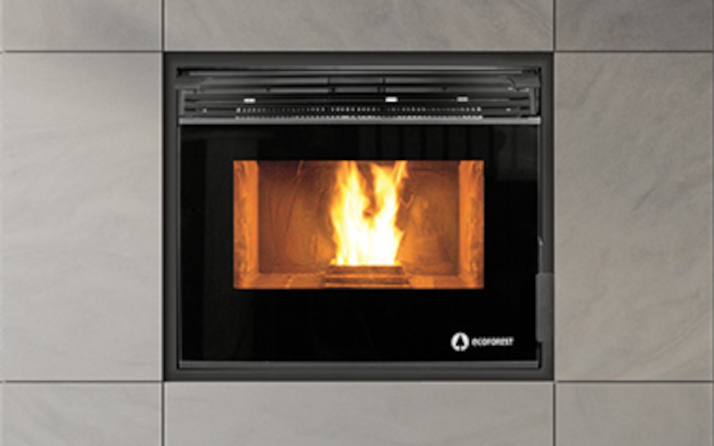 Insert pellet stoves
 Wood stoves
  Wood boilers
 Insert wood stoves
 Charcoal oven





Pellet stoves in apartments are becoming increasingly popular in Spain: they provide pleasant warmth, use a renewable fuel and can help you reduce your energy bills compared with other traditional solutions. But installing one in an apartment is not as simple as buying a stove and plugging it in: there are regulations, flue requirements and permissions from the homeowners’ association that you need to understand clearly.
In this practical guide, we explain, step by step:
- What requirements an apartment must meet to have a pellet stove installed.
- What the flue must be like under the regulations (RITE and CTE).
- What permissions you need from the homeowners’ association.
- Tips for avoiding conflicts with neighbors.
- And why it is important to choose quality equipment and authorized installers, such as Ecoforest pellet stoves.
Can you install a pellet stove in an apartment?
Yes, you can install a pellet stove in an apartment, but only if three main sets of requirements are met:
- Technical: location, output, ventilation, type of flooring and a suitable flue.
- Regulatory: compliance with the Regulation on Thermal Installations in Buildings (RITE) and the Technical Building Code (CTE), which require exhaust gases from biomass appliances to be discharged through the roof (as explained on websites such as Erta).
- Legal/homeowners’ association: permission from the homeowners’ association when common elements such as the façade or roof are affected, under the Horizontal Property Act.
If any of these requirements is not met, the installation may be illegal, unsafe or a source of conflict with neighbors.
Basic technical requirements in an apartment
1. Location: where to place the pellet stove
For a pellet stove in an apartment to work well, its location is key:
- Ideally, it should be in a central area of the apartment (the living or dining room), where the heat can spread.
- The space must be well ventilated, without excessive drafts but not completely airtight either.
- You must observe the safety clearances from furniture, curtains and combustible materials, always following the manufacturer’s instructions.
For wood, laminate or other combustible flooring, regulations and good practice recommend:
- Placing the stove on a protective base (steel, tempered glass or another heat-resistant material) that covers:
- The stove’s entire footprint.
- An additional area in front (usually 30–50 cm) to protect against possible sparks or falling embers.
2. Output suited to the size of the apartment
A pellet stove that is too small will not heat the apartment properly; one that is too large:
- Will mean you have to run it at a low output all the time,
- will cause frequent starts and stops,
- and may mean higher consumption and more maintenance.
As a general guide, many standard apartments (well insulated, 70–100 m²) can be heated with stoves rated between 7 and 10 kW, but the output should always be calculated by an authorized installer who takes into account:
- The total floor area and volume to be heated.
- The building’s level of insulation.
- The climate zone and orientation.
- Whether the stove will supplement another system or be the main source of heating.
3. Ventilation and air supply
Although the stove expels gases through its chimney, it needs air for combustion:
- Ideally, there should be an outside air intake or guaranteed minimum ventilation.
- Installing it in excessively enclosed spaces or very close to powerful extractor hoods is not recommended, as these can create negative pressure and affect the draft.
The critical point: the flue in an apartment
The flue is the aspect that raises the most questions and causes the most problems when installing pellet stoves in apartments.
Where must the exhaust gases be discharged?
Under the RITE and the Technical Building Code, in Spain the combustion products from heating systems (including biomass stoves) must be discharged through the building’s roof.
This means that:
- Exhaust gases must not be discharged directly through the façade, whether horizontally or vertically.
- The pellet stove’s chimney must extend up to the roof through a suitable duct (stainless steel, insulated double-wall pipe outdoors, etc.).
Some buildings already have independent flues (running through courtyards, shafts or hollow structural elements) that can be used, provided that:
- They are independent (not shared with gas boilers, extractor hoods, etc.).
- They are in good condition and have a suitable cross-section and materials, as noted.
Common installation configurations
- Apartment with a pre-installed individual chimney
- The ideal case: the existing duct is used after inspection and, if necessary, adaptation.
- In many penthouses or top-floor apartments, this allows installation without extensive additional work (situations described by outlets such as AS).
- Apartment without a pre-installed chimney
- The usual solution is to install a new vertical flue pipe that passes through the floors and reaches the roof, or runs up the façade beyond the roofline.
- In both cases, common elements (the façade or roof) are affected, so permission from the homeowners’ association is needed.
- Flue through an interior courtyard
- This requires particular care: the flue generally still needs to reach the top of the courtyard, meet clearance requirements and avoid causing problems with smoke and odors.
Regulations: RITE, CTE and the Horizontal Property Act
RITE and CTE: technical regulations
- The Regulation on Thermal Installations in Buildings (RITE) governs the safety, efficiency and maintenance of heating systems, including biomass systems.
- The Technical Building Code (CTE), particularly DB‑HS (health and hygiene), establishes that combustion products must, as a general rule, be discharged through the building’s roof to prevent indoor air pollution and nuisance to others.
Both frameworks are frequently cited in specialist resources such as Erta or Anphibius’s guide to flues.
In practice, this means:
- Dedicated, approved flue systems are required.
- Except in very specific circumstances, simply routing the pipe out through the façade is prohibited for biomass appliances, as Anphibius points out.
- You must comply with the diameters, heights and safety clearances specified by the manufacturer and the UNE standards for chimney design.
Horizontal Property Act: permission from the homeowners’ association and neighbors
Installing a pellet stove in an apartment almost always affects common elements (the façade, roof, courtyards or floors), which are governed by the Horizontal Property Act (LPH).
Reference articles and guides, such as those from Erta, highlight several points:
- If the installation modifies the façade, roof or shared ducts, you will need approval from the homeowners’ association, normally at a homeowners’ meeting.
- In many cases, a qualified majority or even unanimous approval is required if the work is considered an alteration to common elements that affects the building’s appearance or structure.
- In penthouses or apartments with an independent pre-installed flue in good condition, permission may not be necessary if you are simply using a duct already included in the building’s plans, as outlets such as AS also note.
In addition, some local authorities require:
- Notification of the work or a minor works permit to install the flue.
- In some cases, a technical project and supervision of the work by a qualified professional.
Neighbors and living together: how to avoid problems
A common concern is: “What if the neighbors complain about the smoke?”
To minimize the risk of conflict:
- Inform others before installing it
- Explain at a homeowners’ meeting what you want to do, present a diagram of the installation and emphasize that it will be carried out in compliance with regulations and by an authorized installer.
- Provide the stove’s technical specifications (efficiency, emissions, energy label).
- Avoid discharging exhaust gases through the façade at mid-height at all costs
- Although a fan can technically create a forced draft, this does not meet the general RITE/CTE requirement and can cause odors and stains on the façade, making complaints almost inevitable. Informative articles such as those by Anphibius are very clear on this point.
- Choose an efficient, properly adjusted stove
- Good combustion = less visible smoke, less soot and fewer odors.
- This is where a specialist brand like Ecoforest and a well-designed installation make a difference.
- Plan for maintenance
- Regular cleaning of the combustion chamber and flue.
- Annual inspections by a professional, which help prevent backdrafts and unusual emissions.
When does a pellet stove make sense in an apartment?
A good idea when:
- You have, or can install, a vertical flue up to the roof.
- The homeowners’ association authorizes the installation.
- You want a renewable, efficient and comfortable heating system.
- The apartment’s layout allows one well-positioned stove to heat a substantial part of the home.
Complicated or not advisable when:
- It is not possible to obtain approval for a suitable flue.
- The homeowners’ association has already opposed modifications to the façade or roof.
- The apartment has a highly divided layout where one stove would not provide adequate heating.
The role of a good installer (and a good brand)
With regulations becoming increasingly demanding and neighbor approval carrying significant weight, it is essential to:
- Use an authorized biomass installer, preferably one with experience installing systems in multi-story buildings and apartments.
- Choose quality equipment with high efficiency, low emissions and good after-sales service, such as the range of Ecoforest pellet stoves, specifically designed to comply with current regulations and optimize pellet consumption.
An Ecoforest installer can:
- Visit your apartment and assess the actual feasibility of the installation.
- Determine the best route for the chimney to the roof.
- Advise you on the most suitable output and the model best suited to your home.
- Help you prepare the documentation needed for the homeowners’ association or local authority.
Conclusion: yes, but do it properly
Installing a pellet stove in an apartment is possible and can be an excellent decision if:
- The regulations (RITE, CTE, LPH) are followed.
- The flue up to the roof is properly designed.
- You have permission from the homeowners’ association and maintain good relations with your neighbors.
- You choose reliable, efficient equipment and have it professionally installed.
If you are considering this option for your apartment, the logical next step is:
- Contact an Ecoforest installer or the brand’s distributor network,
- so they can assess your particular situation and propose a tailored solution that is safe, legal and comfortable for many winters to come.
