
 Ground-source heat pump
 Air-source heat pump
 Accessories
 What is a heat pump

 Air stoves
 Pellet boilers
 Ducted air stoves
 Hydro stoves
 Accessories
 Insert pellet stoves
 Wood stoves
  Wood boilers
 Insert wood stoves
 Charcoal oven




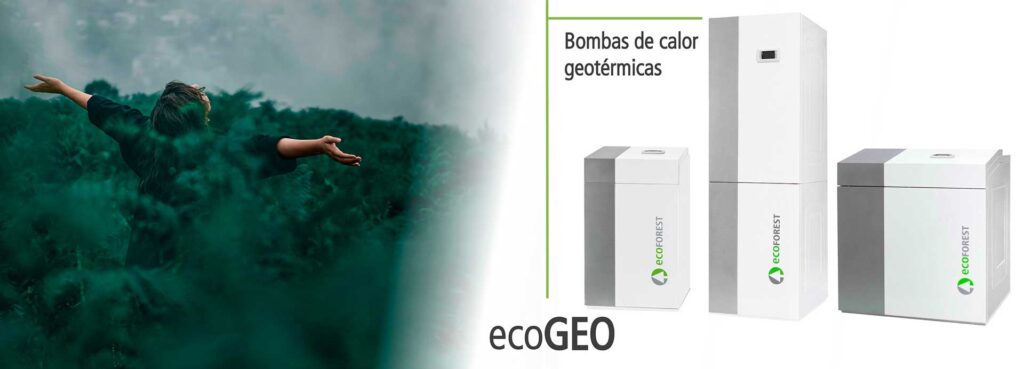
When looking for maximum energy savings and the lowest environmental impact in home heating and cooling, geothermal energy stands out as the leading option. Within this technology, vertical geothermal energy is the most advanced, stable and efficient solution for heating, cooling and domestic hot water (DHW).
If you are considering upgrading your energy system or building a detached home, this article explains in detail how vertical ground loops work, their associated costs, when they are the best option and why Ecoforest’s ecoGEO+ solutions stand out in the market.
What is vertical geothermal energy and how do ground loops work?
Vertical geothermal energy is a heating and cooling system that uses the constant temperature deep underground to heat and cool a building. Unlike other systems, geothermal heat pumps are water-to-water systems. This means they extract heat from the ground through a heat-transfer fluid and transfer it to the home’s water circuit (such as underfloor heating or radiators).
The ground loop is installed in the following steps:
- Drilling the ground: One or more narrow vertical boreholes are drilled, typically to a depth of between 50 and 150 metres.
- Inserting the probes: A U-shaped geothermal probe made of high-strength polyethylene is inserted into each borehole, forming a closed loop.
- Circulating the fluid: Water mixed with antifreeze (glycol) circulates through these pipes. In winter, the fluid absorbs heat from the ground and carries it to the heat pump; in summer, the process is reversed and excess heat from the home is released into the ground.
- Sealing the borehole: The remaining space between the probe and the borehole walls is filled with a special, highly thermally conductive geothermal grout to ensure optimal energy transfer and protect aquifers.
Key advantages: When should you choose a vertical ground loop?
The choice of ground loop depends closely on ground conditions and the available space. For a more detailed comparison of site requirements, see our guide to vertical vs horizontal geothermal energy.
However, a vertical ground loop is the ideal option in the following situations:
- Small gardens or limited plots: Because the boreholes run straight down into the ground, they take up minimal surface space. This is the perfect solution for detached homes on small plots or in urban areas where burying horizontal collectors is impossible.
- Climates with extreme temperatures: Below a depth of 15 metres, the ground temperature remains constant throughout the year (between 10°C and 15°C in Spain). This means performance does not depend on the outdoor climate, offering greater stability than air-source heat pump systems.
- Maximum energy efficiency: By drawing on such a stable heat source, geothermal heat pumps achieve a COP (coefficient of performance) of between 4 and 5. In other words, they produce 4 to 5 kW of thermal energy for every kW of electricity consumed.
- Greater durability: Buried underground and protected from the weather, solar radiation and oxygen, vertical geothermal probes have a service life of more than 50 years and require very little maintenance.
Costs of a vertical geothermal installation
There is no denying that vertical geothermal energy requires a higher initial investment than horizontal ground loops or air-source heat pump systems, mainly because heavy drilling machinery is needed.
The total installation cost is divided into three main components:
1. Boreholes and ground loops (Drilling)
This accounts for the largest cost difference. The price per linear metre of drilling (including drilling the borehole, installing the polyethylene probes, adding the specialist grout and making the connections to the plant room) usually varies according to the hardness of the ground and the geographical area.
2. The equipment (Heat pump)
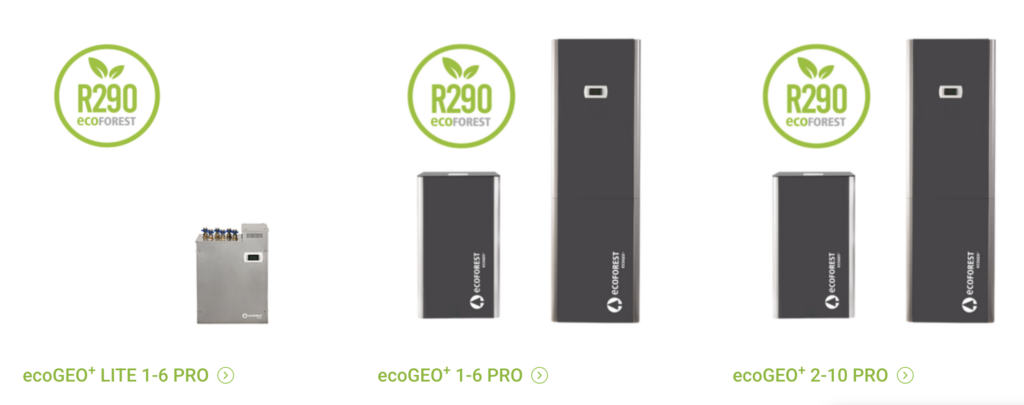
The heat pump technology. Investing in high-efficiency equipment allows energy consumption to be precisely adjusted, reducing monthly electricity costs.
3. The indoor installation
This includes connections in the plant room, expansion vessels, circulation pumps and the home’s heat distribution system (with underfloor heating being the most efficient combination).
Is the investment worthwhile? Although the initial cost may seem daunting, vertical geothermal energy has the lowest operating costs of any technology. Savings on monthly energy bills can reach up to 80% compared with fossil fuels. This allows for an excellentpayback period, making it a very secure investment in your property.
What sets Ecoforest apart: The ecoGEO+ range
At Ecoforest, we have a long history of innovation: in 2012, we became the first Spanish manufacturer of geothermal heat pumps. All that experience is reflected in our ecoGEO+ range, designed specifically to extract every possible watt of energy from the ground using exclusive technologies.
Innovation with natural R290 refrigerant
In December 2020, we revolutionised the market again by becoming the first European manufacturer to launch a geothermal heat pump using natural R290 refrigerant (propane). The ecoGEO+ PRO range uses this environmentally friendly gas, which has a global warming potential (GWP) of just 3. Thanks to its thermodynamic properties, it can deliver heating temperatures of up to 70°C and DHW temperatures of up to 75°C without the need for backup electric heaters.
ecoGEO+ PRO models for vertical ground loops
| Model | Power Range | Performance (COP) | Recommended Application |
|---|---|---|---|
| ecoGEO+ 1-6 PRO | 1 – 6 kW | Up to 500% | New, energy-efficient detached homes or Passive House buildings. |
| ecoGEO+ LITE 1-6 PRO | 1 – 6 kW | Up to 500% | Ultra-compact model (59 cm wide), ideal for interiors where space is at a premium. |
| ecoGEO+ 2-10 PRO | 2 – 10 kW | Up to 500% | Medium-sized detached homes and renovations. |
| ecoGEO+ 4-16 PRO | 4 – 16 kW | Up to 500% | Large detached homes (>200 m²). |
Note: For much greater demand in large complexes, hotels or residential buildings, we offer the ecoGEO+ HP (High Power) range, capable of reaching up to 600 kW in cascade.
Proprietary technologies that make the difference
- Built-in inverter technology: All our heat pumps feature variable-speed Scroll compressors. They adjust their output in real time to the home’s heating and cooling demand, drastically reducing starts and stops to extend equipment life and save electricity.
- HTR (High Temperature Recovery) technology: This patented heat recovery system uses hot gases from the compressor to produce domestic hot water (DHW) at the same time. In summer, while you cool your home passively or actively, HTR technology heats your domestic hot water practically for free.
- Intelligent ecoSMART management: Our solutions enable seamless integration with solar photovoltaic energy through the ecoSMART e-manager. This controller detects surplus electricity from your solar panels and adjusts the heat pump’s settings to store energy as hot water or heating and cooling, with the aim of achieving a zero balance or zero energy bills.
If you have a small garden but ambitious goals for savings and sustainability, vertical geothermal energy with Ecoforest equipment is the smartest, most future-focused choice you can make for your home.
