
 Ground-source heat pump
 Air-source heat pump
 Accessories
 What is a heat pump

 Air stoves
 Pellet boilers
 Ducted air stoves
 Hydro stoves
 Accessories
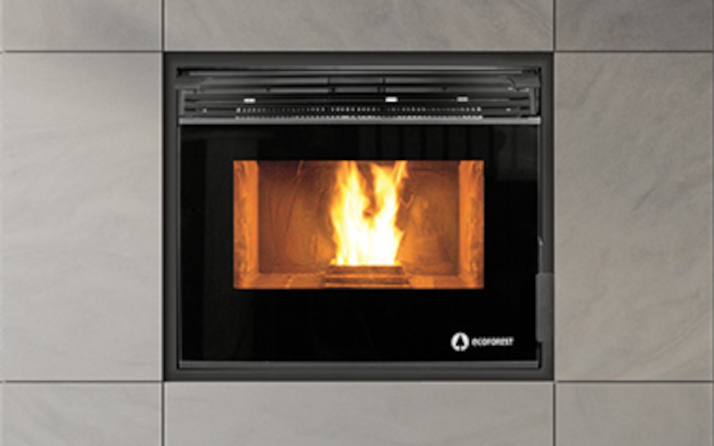 Insert pellet stoves
 Wood stoves
  Wood boilers
 Insert wood stoves
 Charcoal oven




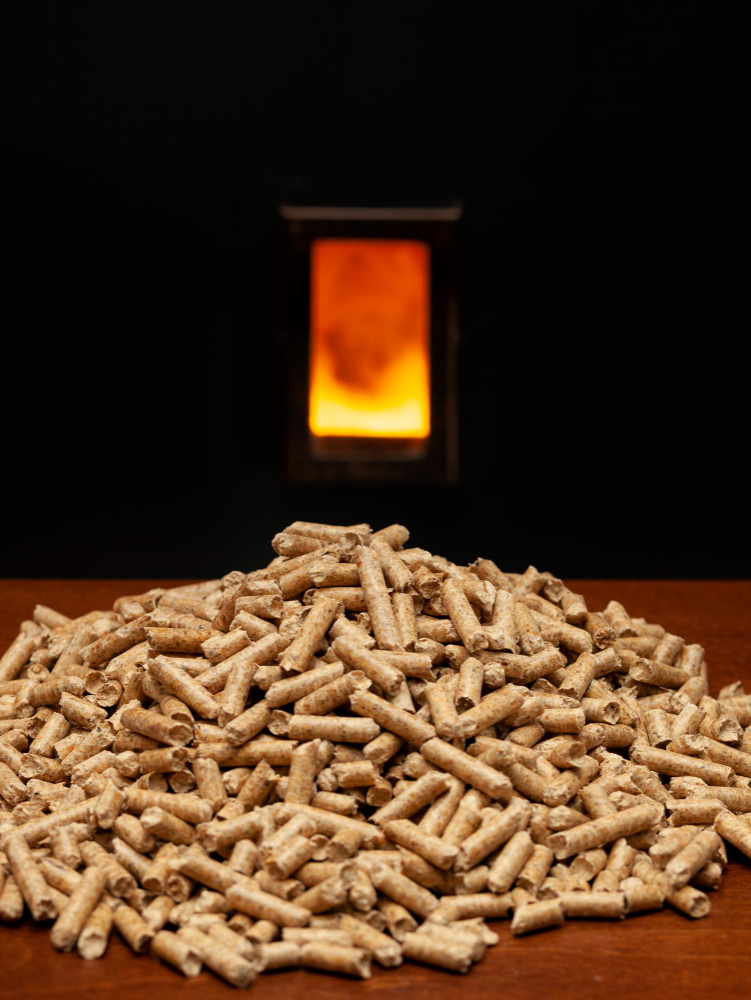
The use of solid biofuels for home heating has undergone a remarkable transformation in recent years. If you are considering installing a biomass system or want to optimize the performance of your current equipment, it is essential to understand the raw material that produces this clean, efficient heat.
In this article, we explain in detail what wood pellets are, what they are made of, how they are manufactured, and why they have become the preferred fuel for modern pellet stoves and boilers.
1. What are stove pellets, and how are they defined?
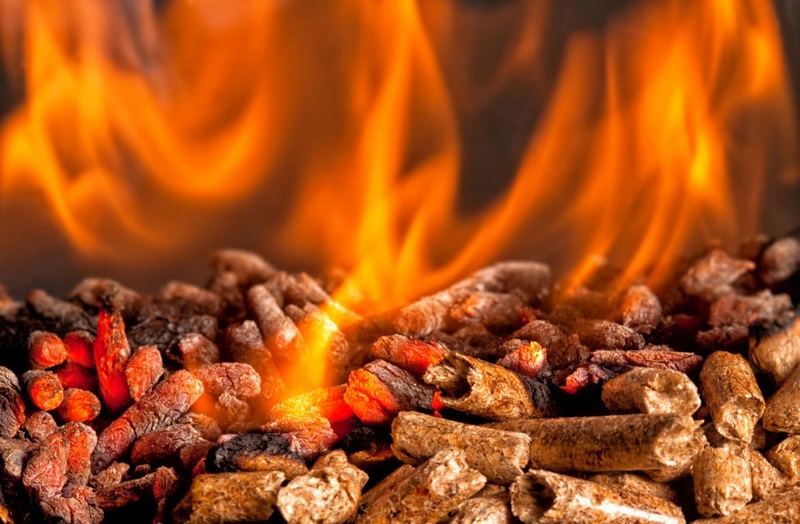
A wood pellet is a dense, compressed, standardized solid biofuel shaped into small cylinders (typically 6 to 8 mm in diameter and 10 to 40 mm long).
It is produced by putting by-products from the wood industry (sawmills, carpentry workshops, and sustainable forestry) to good use. Unlike traditional firewood, pellets are mechanically processed to achieve a uniform composition, low moisture content, and very high energy output per unit of volume.
2. What are pellets made of? Composition and raw materials
The most common question when discovering this biofuel is what pellets are made of. Do they contain chemical adhesives? Are synthetic glues used to bind them together?
100% natural composition
A high-quality wood pellet for heating consists exclusively of sawdust and shavings from clean wood that has not been chemically treated or varnished.
- No synthetic additives: Quality pellets for domestic stoves contain no glues or chemical binders.
- The key role of lignin: Wood naturally contains a polymer called lignin. During compression under high pressure and heat, the lignin softens and acts as a 100% natural adhesive that binds the wood fibers together, giving each cylinder its compact shape and characteristic glossy finish.
Types of wood used
The type of wood affects pellet density and how the pellets burn:
- Softwoods (conifers such as pine and fir): These have a high lignin and natural resin content, which makes them easier to bind and provides excellent heat output with quick ignition. They are the most common raw material in certified A1 pellets.
- Hardwoods (broadleaf trees such as beech and oak): These are denser and burn somewhat more slowly, although they tend to produce slightly more ash if not blended in the right proportions.
3. How are wood pellets made? The process step by step
The industrial pellet manufacturing process is designed to maximize the material’s energy density while following the principles of the circular economy:
[Raw material: Sawdust and Shavings]
               │
               ▼
   [1. Screening and Cleaning] (Removal of impurities)
               │
               ▼
   [2. Controlled Drying]  (Moisture reduced to <10%)
               │
               ▼
  [3. Grinding and Refining] (Uniform particle size)
               │
               ▼
  [4. Die Compression]  (Heat and pressure activate lignin)
               │
               ▼
  [5. Cooling and Screening] (Final hardness and dust removal)
               │
               ▼
   [6. Packaging and Sale]   (15 kg bags or big bags)
- Screening and cleaning: Any sand, soil, stones, or metal particles are removed.
- Drying: Freshly produced sawdust may have a moisture content above 40–50%. It is placed in industrial dryers until its moisture content falls below 8–10%.
- Grinding: The wood is ground to obtain a uniform particle size.
- Compression (pelletizing): The dry sawdust is compressed under high pressure and forced through a die with cylindrical holes. Friction raises the temperature, activating the natural lignin.
- Cooling and screening: When the pellets leave the press, they are hot and pliable. They are cooled to harden them, then screened to remove fine dust before packaging.
4. Technical specifications and quality certifications (ENplus® and DINplus)
Not all pellets are suitable if you want your equipment to work optimally and avoid breakdowns. The technical specifications for premium-quality pellets are governed by European standards such as ISO 17225-2.
Key properties of a quality pellet:
- Calorific value: Between 4.5 kWh/kg and 5.3 kWh/kg (16.5–19 MJ/kg).
- Moisture: Below 10% (the lower the moisture content, the more energy is released as heat and the less smoke is produced).
- Ash content: Below 0.7% for class A1.
- Bulk density: Above 600 kg/m3.
Commercial certifications
| Quality certification | Category | Wood source | Ash content | Recommended application |
|---|---|---|---|---|
| ENplus® A1 / DINplus | A1 | Untreated virgin wood | ≤0.7% | High-efficiency domestic stoves and boilers |
| ENplus® A2 | A2 | Wood with a higher ash/bark content | ≤1.2% | Medium-sized equipment or industrial boilers |
| ENplus® B | B | Clean recycled or industrial wood | ≤2.0% | Industrial use only |
Technical tip: Using uncertified or lower-grade pellets in a domestic stove increases buildup in the burner, requires more frequent cleaning, and can clog the flue ducts.
5. Advantages of pellets over other fuels
The growing popularity of pellets compared with traditional heating using firewood, heating oil, or gas rests on four pillars:
                  ┌─────────────────────────────────────────┐
                  │            PELLET BENEFITS              │
                  └────────────────────┬────────────────────┘
                                       │
     ┌──────────────────┬──────────────┴───────┬──────────────────┐
     ▼                  ▼                      ▼                  ▼
[Eco-friendly]     [Cost-effective]        [Automatable]      [Space-saving]
Carbon-neutral    Savings vs. oil         Automatic auger    Compact bags
and renewable     and electricity         feed               easy to stack
- Carbon neutrality: The amount of CO2 emitted when pellets burn is equivalent to the amount the tree absorbed through photosynthesis while growing, completing a carbon-neutral cycle.
- High efficiency and automation: Thanks to their uniform shape and ability to flow freely, pellet stoves can feed the burner automatically using an auger, allowing scheduled and thermostat-controlled ignition and shutdown.
- Space savings: Because pellets are highly densified, they require up to three times less storage space than unprocessed firewood to deliver the same amount of energy.
- Energy independence: Pellets support the local economy and forestry sector while reducing dependence on imported fossil fuels.
6. Innovation in combustion technology: Ecoforest multi-fuel systems
Although wood pellets are the leading standard, technological innovation has expanded the range of biomass fuels that can be used.
At Ecoforest, the pioneering company that introduced Europe’s first pellet stove in 1992 and transformed the market in 1993 by creating the first pellet hydro stove, we have developed an exclusive electronic control system.
Our pellet stoves and boilers are multi-fuel systems:
- They can burn wood pellets, as well as alternative biofuels such as olive pits and almond shells.
- They feature automatic combustion control, adjusting the air and fuel supply in real time according to the quality of the pellets used.
- They include advanced technologies such as the Vacuum Cleaning System and ecoSILENCE mode for quiet operation and reduced maintenance.
To explore the options available for your home, take a look at our range of air-heating stoves, ducted stoves, and pellet boilers for radiators.
Frequently asked questions (FAQs) about wood pellets
What happens if pellets get wet or absorb moisture?
Pellets are highly hygroscopic. If they come into direct contact with water or high ambient humidity, they absorb the moisture, swell, and lose their cohesion, breaking down into unusable sawdust. It is therefore essential to store them in a dry place.
Are dark pellets worse than light-colored ones?
Not necessarily. Color depends on the wood species used (pine, for example, is light-colored, while oak is darker) or whether the wood was dried at higher temperatures. What matters is not the color but the ENplus® A1 certification label.
Can I use pellets in a traditional wood-burning stove?
It is not recommended. Wood-burning stoves do not have a burn pot designed for pellets or a calibrated primary and secondary air supply. Burning pellets in a wood-burning stove can smother the fire or cause uncontrolled combustion.
Conclusion
Understanding what wood pellets are and what they are made of helps us appreciate a biofuel that combines the sustainability of biomass with the convenience of modern automation. By choosing high-quality certified pellets (ENplus® A1) and pairing them with efficient equipment featuring intelligent combustion control, you can enjoy maximum comfort, optimized fuel consumption, and responsible environmental care.
