Ground-source heat pump
 Air-source heat pump
 Accessories
 What is a heat pump

 Air stoves
 Pellet boilers
 Ducted air stoves
 Hydro stoves
 Accessories
 Insert pellet stoves
 Wood stoves
  Wood boilers
 Insert wood stoves
 Charcoal oven



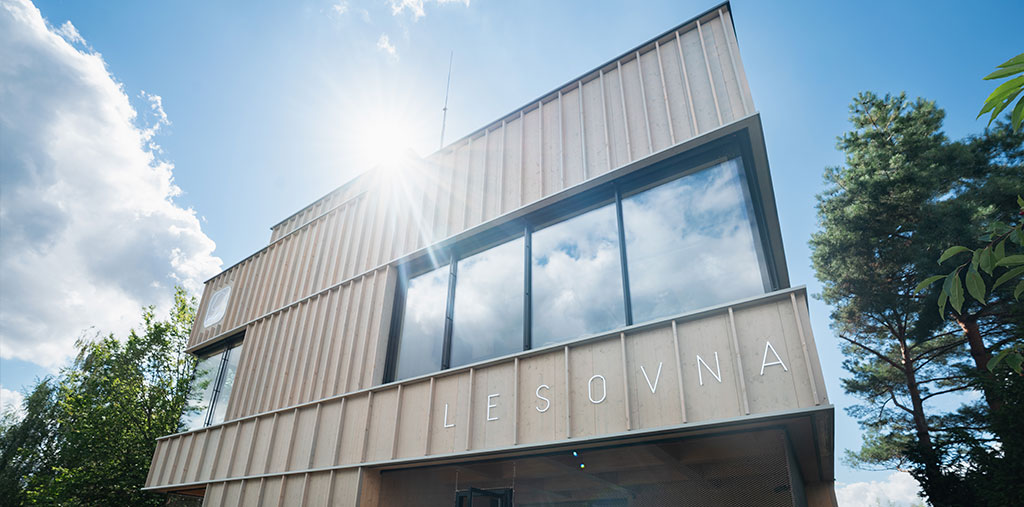
Lesovna at the Czech University of Life Sciences in Prague combines sustainable timber architecture with an ecoGEO⁺ 22 kW ground-source heat pump powered by two 150-metre geothermal boreholes. The system provides underfloor heating and active cooling with heat recovery, storing excess heat in the ground to improve seasonal efficiency. Combining renewable energy, Czech timber and building-performance monitoring, the project demonstrates an innovative approach to sustainable, energy-efficient educational buildings.
Lesovna, at the Czech University of Life Sciences in Prague, stands out as an example of sustainable timber architecture combined with advanced geothermal technology. Designed as a multifunctional space for teaching, research and public engagement, the building demonstrates how renewable heating and cooling systems can complement the use of locally sourced, sustainable construction materials.
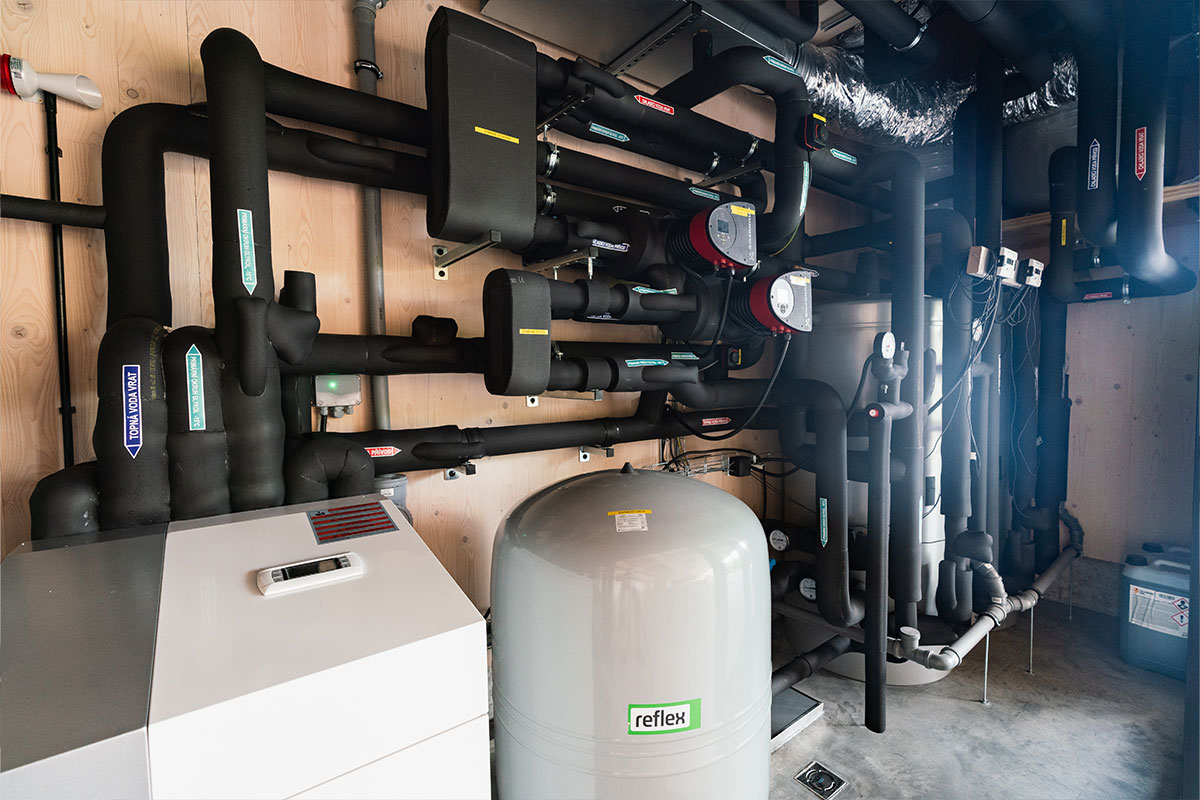
At the heart of the installation is an ecoGEO+ B1 5-22 HTR EH ground-source heat pump, with a heating output of 22 kW. The system extracts renewable thermal energy from two geothermal boreholes, each 150 metres deep, providing heating and active cooling through an integrated underfloor distribution system.
The project illustrates how the combination of geothermal energy, heat recovery and sustainable building design can reduce reliance on conventional heating and air-conditioning systems while creating comfortable indoor conditions for an educational and research facility.
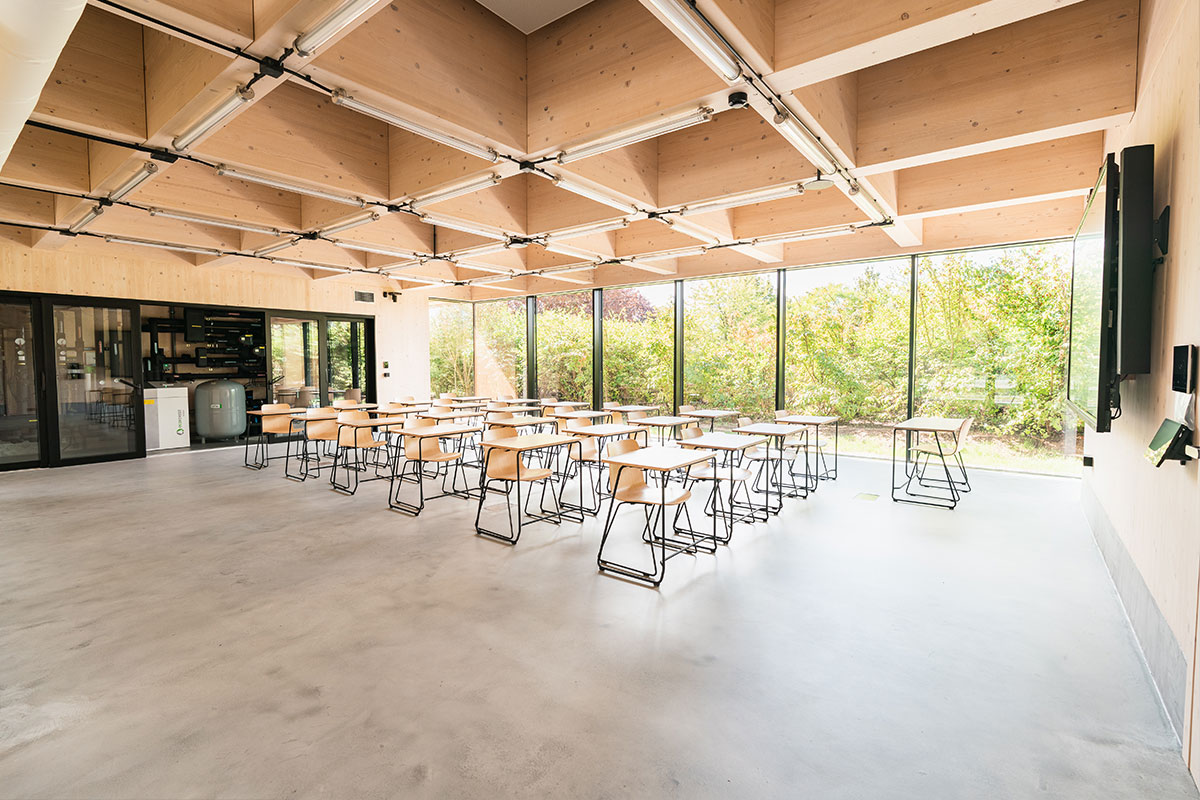
Geothermal boreholes for renewable heating
The building’s heating demand is covered by an ecoGEO+ B1 5-22 HTR EH ground-source heat pump, rated at 22 kW. The system uses the relatively stable temperatures of the ground as a renewable energy source, extracting heat through two vertical boreholes drilled to a depth of 150 metres each.
This configuration provides a compact and reliable solution for the building’s heating requirements, making effective use of the site’s underground thermal resources without requiring a large surface collector field.
The geothermal installation offers several advantages:
- Renewable heat collection from the ground.
- Stable source temperatures throughout the heating season.
- Compact installation footprint, suitable for educational and institutional buildings.
- Production of heating and cooling within a single system.
The system demonstrates the suitability of ground-source heat pumps for modern timber buildings, combining architectural flexibility with efficient renewable energy provision.
Active cooling and heat recovery
One of the installation’s most distinctive features is its active cooling system with heat recovery. During periods of cooling demand, the heat pump extracts heat from the building and transfers it into the ground through the geothermal boreholes.
Rather than simply rejecting this heat into the outdoor environment, the installation uses the ground as a thermal storage medium. The recovered heat increases the temperature of the ground surrounding the boreholes, helping to improve the conditions under which the heat pump operates during the subsequent heating season.
This approach provides several potential benefits:
- Heat recovery from the building during cooling operation.
- Thermal storage in the ground.
- Improved ground-source temperatures at the beginning of the heating season.
- Integrated heating and cooling through a single heat pump system.
By recovering and storing heat that would otherwise be rejected, the installation makes more effective use of the available geothermal infrastructure and supports efficient year-round operation.
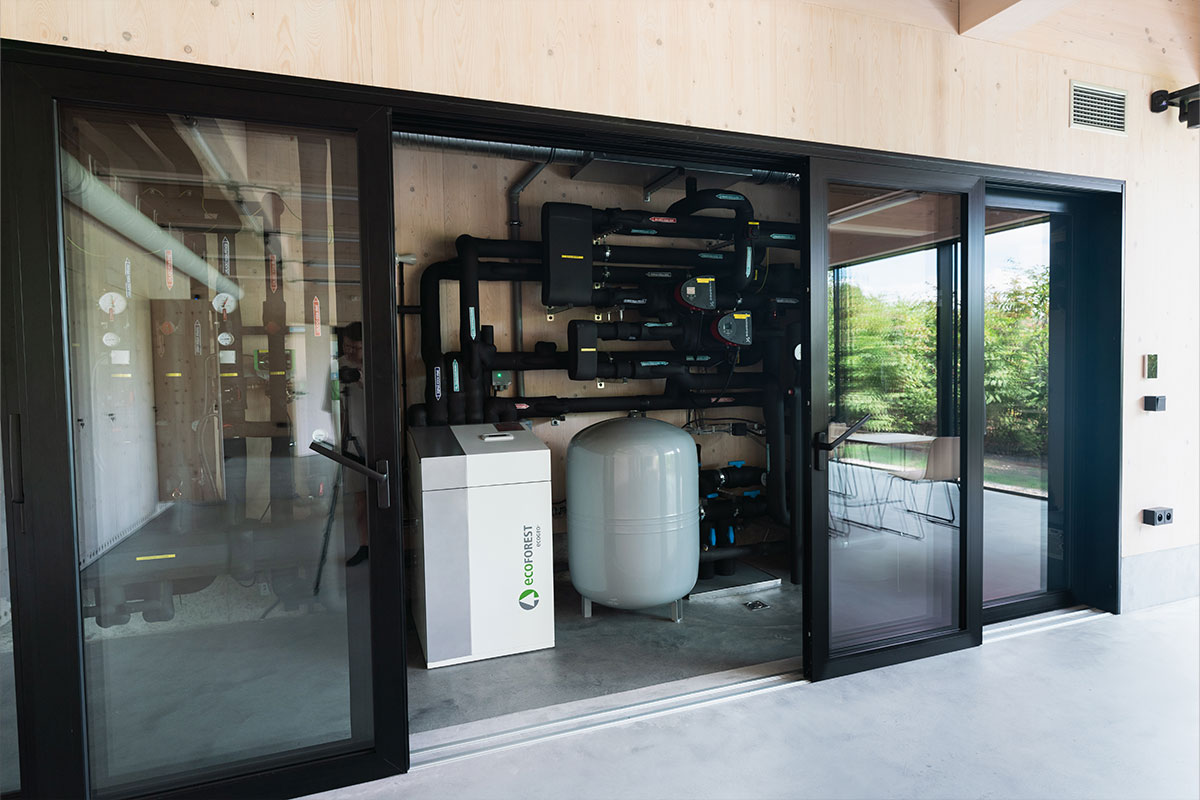
Ground-source heat pump with underfloor heating and cooling
Lesovna uses underfloor heating and cooling to distribute thermal energy throughout the building. This approach provides a low-temperature heat distribution system that is well suited to ground-source heat pump technology.
During winter, the underfloor system distributes heat evenly across the occupied spaces, supporting comfortable indoor temperatures. During summer, it can provide cooling by removing heat from the building and dissipating it into the geothermal system.
The combination of underfloor distribution and ground-source heat pumps offers several advantages:
- Even heat distribution throughout occupied spaces.
- Low-temperature heating, supporting efficient heat pump operation.
- Integrated cooling without relying exclusively on conventional air-conditioning equipment.
- Reduced dependence on separate heating and cooling systems.
- A discreet installation that preserves the architectural character of the timber interior.
This solution is particularly appropriate for a contemporary educational building.
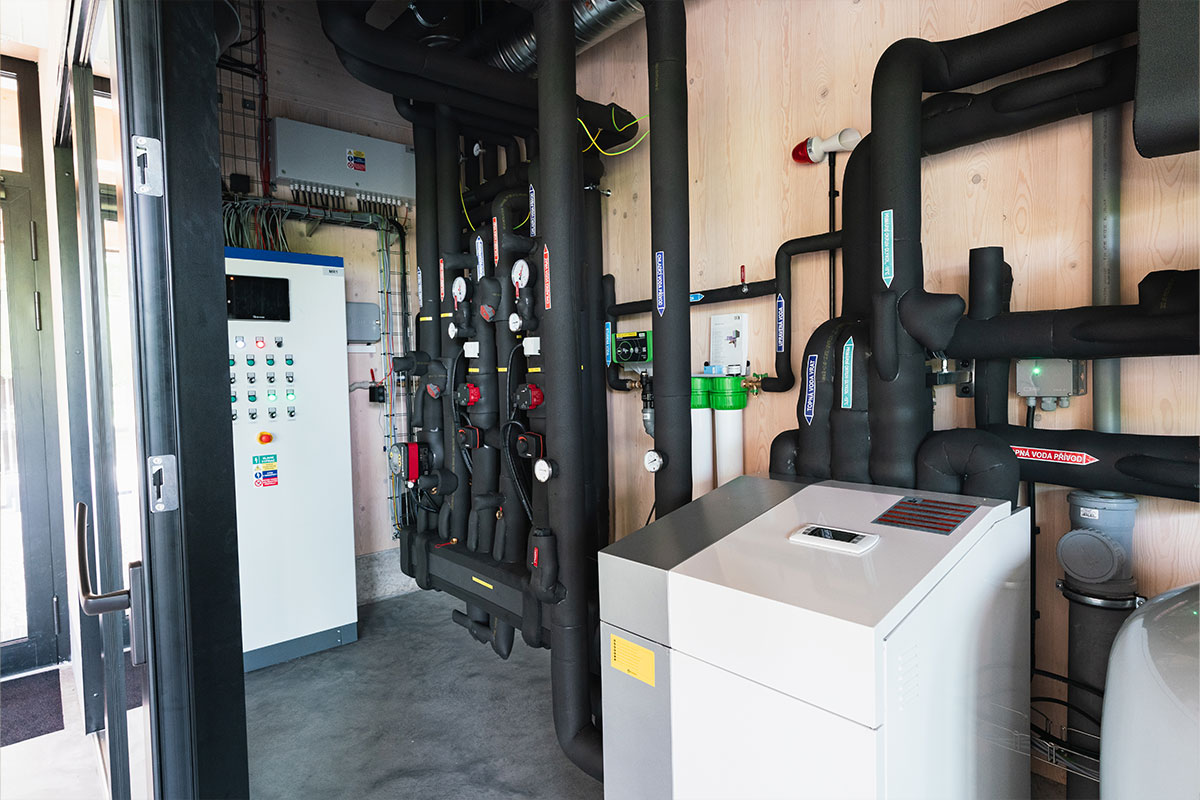
A living laboratory for sustainable construction
Beyond its function as an educational and community facility, Lesovna also serves as a research platform for the development of timber buildings. The project incorporates 52 sensors designed to monitor building performance, including structural behaviour, humidity and temperature.
The collected data will contribute to research into the long-term performance of wooden buildings and help improve the understanding of timber construction in the Czech Republic.
Combined with its ground-source heating and cooling system, this monitoring infrastructure creates opportunities to study the interaction between building materials, indoor conditions and energy technologies under real operating conditions.
The building therefore represents more than an example of sustainable construction: it is a living laboratory connecting architecture, renewable energy, research and practical application.
405 m³ of Czech timber and a CLT structure assembled in 19 days
The building was conceived as a showcase for the potential of Czech timber as a renewable construction material. Approximately 405 m³ of Czech wood, including ash, larch, pine and spruce, were used in the construction of the load-bearing structure.
Thanks to the prefabrication of cross-laminated timber (CLT) panels and glued laminated timber (glulam) beams, the main timber structure was assembled in just 19 days. Its distinctive cantilevered design, achieved without supporting columns in the corners, demonstrates the architectural and structural possibilities of modern timber construction.
The building provides approximately 581 m² of usable floor space, including a classroom on the ground floor and a community room on the upper floor. A green roof containing approximately 300 plants and trees further reinforces the project’s connection with the natural environment.
By combining renewable construction materials with an efficient ground-source heating and cooling system, the Lesovna provides a practical example of how sustainable architecture and renewable energy technologies can work together to reduce environmental impact.
Lesovna demonstrates how a building can combine the use of locally sourced renewable materials with efficient energy systems. Its timber structure reduces reliance on conventional construction materials, while the geothermal heat pump provides renewable heating and cooling through a compact installation.
The project also highlights the importance of considering building design, thermal comfort and energy supply as parts of a single integrated strategy. The use of heat recovery during cooling further strengthens this approach by allowing thermal energy to be stored in the ground for subsequent heating operation.