Ground-source heat pump
 Air-source heat pump
 Accessories
 What is a heat pump

 Air stoves
 Pellet boilers
 Ducted air stoves
 Hydro stoves
 Accessories
 Insert pellet stoves
 Wood stoves
  Wood boilers
 Insert wood stoves
 Charcoal oven





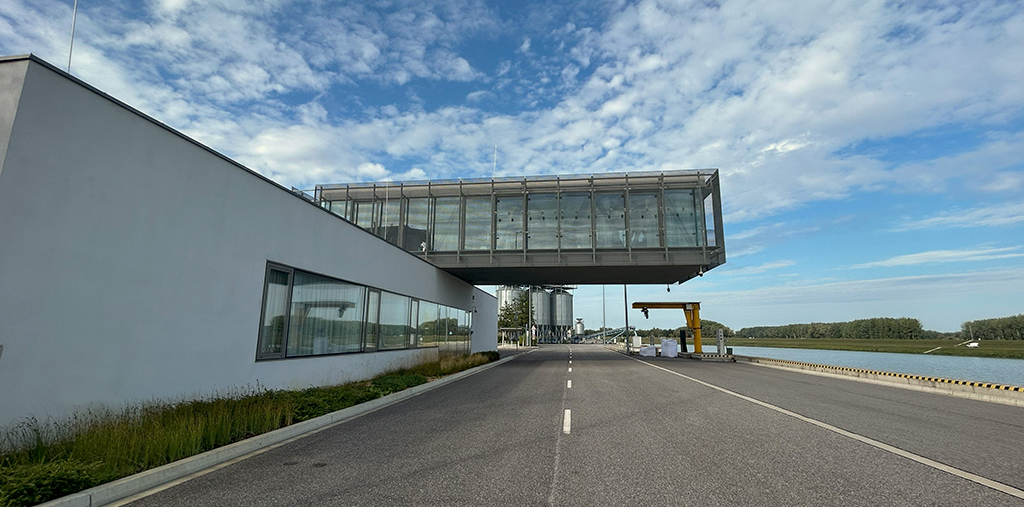
Gönyű National Public Port in Győr, Hungary, stands out as a benchmark project for industrial geothermal applications. Developed as a modern public infrastructure facility, the building combines energy-efficient architecture with renewable technology to provide heating, cooling and domestic hot water from a single integrated system.
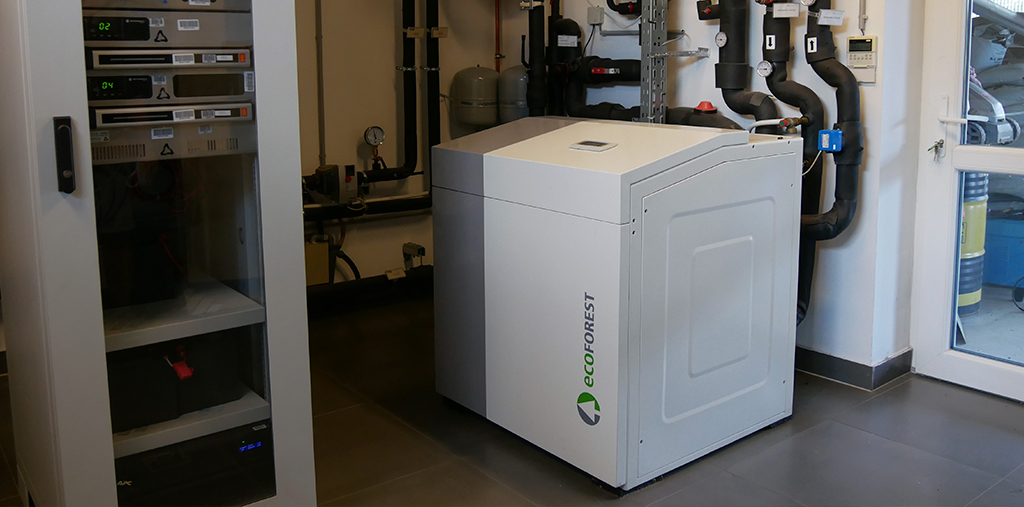
At the centre of the installation is an ecoGEO+ HP3 12-40 ground-source heat pump connected to a horizontal ground collector field. The project demonstrates how a coordinated design approach between architecture and engineering can reduce operating costs while maintaining reliable performance in a demanding industrial environment.
Building design focused on reducing energy demand
Energy efficiency was considered from the earliest stages of the design process. The building incorporates high-performance insulation and glazed façades protected by an external grid-shaped shading system, which limits solar gains during summer while allowing useful solar radiation to enter during winter.
This passive strategy reduces both heating and cooling demand, creating favourable conditions for the renewable energy system.
Horizontal ground collector adapted to the site
Because major earthworks had already been planned for the port development, the project team took advantage of the available land to install horizontal ground-source wells, avoiding the cost of deep borehole drilling.
The ground loop consists of 1,360 metres of 40 mm piping buried at a depth of four metres, where the ground temperature remains sufficiently stable throughout the year.
This solution provides:
- Lower installation costs than vertical drilling.
- Efficient use of the construction site.
- Stable source temperatures for the heat pump.
- Simple operation and maintenance.
The collector supplies renewable energy to the ecoGEO⁺ HP3 12-40, which manages:
- Space heating.
- Domestic hot water production.
- Passive cooling.
- Active cooling when required.
- Mixed hydraulic circuits.
- An external passive cooling heat exchanger.
All these functions are managed through the heat pump’s integrated control software, simplifying the installation and eliminating the need for additional external controllers.
Passive cooling with minimal electrical consumption
One of the project’s most notable features is its passive cooling mode. Instead of activating the compressor, the system circulates fluid from the ground loop through a heat exchanger, transferring heat directly from the building into the ground.
This operating mode offers several advantages:
- Very low electricity consumption: free cooling.
- Reduced compressor wear.
- Lower maintenance requirements.
- Improved seasonal efficiency.
- Quiet operation without conventional air-conditioning equipment..
For buildings with significant summer cooling demand, this approach provides substantial energy savings compared with traditional split air-conditioning systems.
Seasonal performance and operating savings
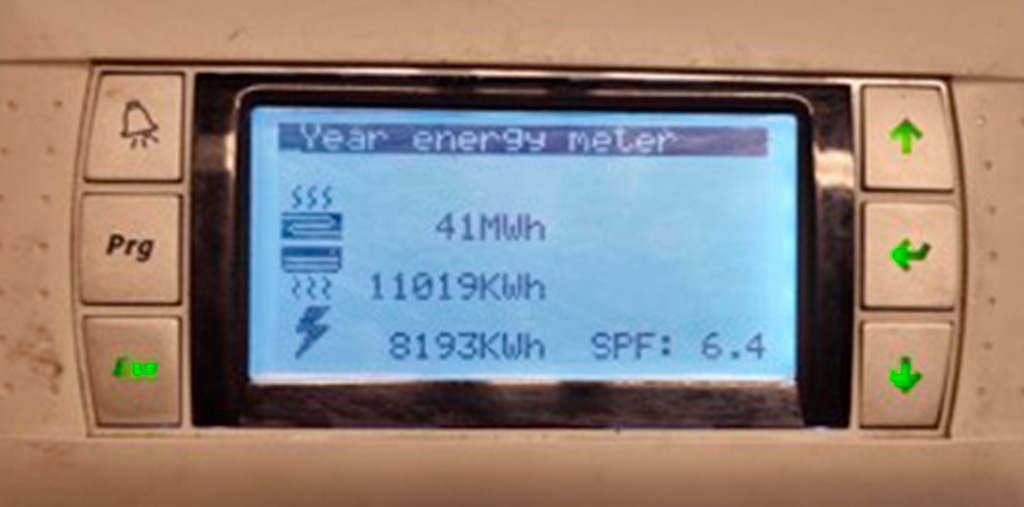
The careful sizing and layout of the collector field ensure stable primary circuit conditions throughout the year. As a result, the installation achieves an SPF of 6.4, with values reaching 9.9 in May under particularly favourable operating conditions.
The combination of reduced thermal demand, ground-source heat pump technology, passive cooling operation and integrated hydraulic management enables an estimated payback period of around two years compared with a conventional solution based on gas boilers and split air-conditioning systems.
Recognition for sustainable infrastructure
The project’s integrated sustainability concept received important professional recognition, including:
- 2018 Construction Industry Level Award.
- XXII Hungarian Real Estate Development Level Award.
These distinctions acknowledge the successful integration of architectural efficiency measures with advanced renewable energy technology in a public industrial facility
By combining ecoGEO⁺ technology, an optimised horizontal ground collector design and passive cooling, the project has created an industrial facility that achieves high efficiency, low operating costs and long-term sustainability, while meeting the operational requirements of a modern public port.