
 Ground-source heat pump
 Air-source heat pump
 Accessories
 What is a heat pump


 Air stoves
 Pellet boilers
 Ducted air stoves
 Hydro stoves
 Accessories
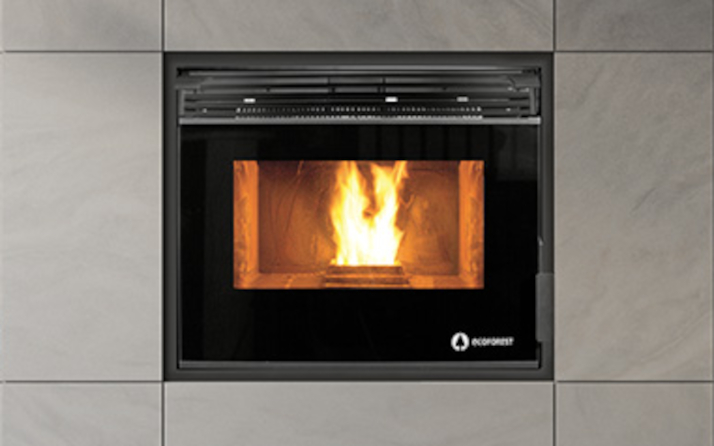 Insert pellet stoves
 Wood stoves
 Wood boilers
 Insert wood stoves
 Charcoal oven





Aerothermal heating heats a home using an air-to-water heat pump: the system extracts energy from the outdoor air, raises its temperature and transfers it to the water circulating through the underfloor heating, radiators or fan coils. For every kWh of electricity it consumes, it can deliver between 3 and 5 kWh of heat, depending on outdoor conditions and the installation. The same system also produces domestic hot water and, in most cases, provides cooling in summer.
In this guide, we explain how aerothermal heating works, which heat emitters are compatible, how to calculate its electricity use and when it pays off compared with a gas or oil boiler or electric heating.
How aerothermal heating works
An aerothermal heat pump operates using a refrigeration cycle, like an air conditioner but in reverse: a refrigerant absorbs heat from the outdoor air (even at sub-zero temperatures), a compressor raises its temperature and a heat exchanger transfers that heat to the home’s water circuit. If you want a detailed look at the process, we explain it in how aerothermal heating works step by step.
The key is the flow temperature, meaning the temperature of the water supplied to the heat emitters. The lower it is, the more efficiently the heat pump operates. That is why aerothermal heating performs best with underfloor heating and fan coils, and somewhat less efficiently with radiators that require very hot water.
COP and SCOP: the two figures to look at
- COP: the ratio of heat delivered to electricity consumed at a particular time under specific conditions. A COP of 4 means 4 kWh of heat for every kWh of electricity.
- SCOP: the average efficiency over the entire heating season. It is the most useful figure for estimating annual electricity use because it accounts for both cold and mild days.
Compatible heat emitters: underfloor heating, radiators or fan coils
| Heat emitter | Typical water temperature | Suitability for aerothermal heating |
|---|---|---|
| Underfloor heating | 30–40 °C | Excellent: maximum efficiency and even comfort |
| Fan coils | 35–45 °C | Very good: they also provide cooling |
| Low-temperature radiators | 45–55 °C | Good |
| Conventional radiators | 55–70 °C | Possible with high-temperature heat pumps |
These temperatures are indicative: the actual figure depends on insulation, emitter size and climate. We explore each option in more detail in aerothermal heating with underfloor heating, aerothermal heating with radiators and what a fan coil is.
Can I keep my radiators?
In many cases, yes. Heat pumps that use natural R290 (propane) refrigerant, such as Ecoforest’s ecoAIR+ PRO range, can produce flow temperatures above 70 °C, very similar to those of a gas or oil boiler. This makes it easier to replace the boiler without changing the radiators. Even so, it is worth checking whether the radiators are correctly sized: operating at a lower temperature always saves energy. We examine this in high-temperature aerothermal heating with old radiators and the flow temperature aluminium radiators need.
How much electricity aerothermal heating uses
The simplest way to estimate it is to divide the home’s heating demand (in thermal kWh per year) by the system’s SCOP:
Annual electricity use ≈ heating demand ÷ SCOP
| Annual heating demand | SCOP 3 | SCOP 4 | SCOP 5 |
|---|---|---|---|
| 6,000 kWh | 2,000 kWh | 1,500 kWh | 1,200 kWh |
| 10,000 kWh | 3,333 kWh | 2,500 kWh | 2,000 kWh |
| 15,000 kWh | 5,000 kWh | 3,750 kWh | 3,000 kWh |
To convert this into euros, multiply it by the price you pay per kWh of electricity. For example, at €0.15/kWh (an illustrative figure only: it depends on your tariff), 2,500 kWh amounts to around €375 a year for heating. You can find your home’s heating demand on its energy performance certificate or, better still, obtain it from a heat load calculation carried out by the installer.
If you have solar panels, some of that electricity use can be covered by your own generation. We discuss this in aerothermal heating and solar panels.
Aerothermal heating compared with other heating systems
| System | How it generates heat | Typical efficiency |
|---|---|---|
| Aerothermal heating | Heat pump that uses energy from the air | 3–5 kWh of heat per kWh of electricity |
| Condensing gas boiler | Natural gas combustion | Less than 1 kWh of heat per kWh of gas |
| Electric heating (radiators, storage heaters) | Joule heating | 1 kWh of heat per kWh of electricity |
Using the same amount of electricity, a heat pump delivers several times more heat than an electric radiator. You can find the full comparison in electric heating vs aerothermal heating. And if you are concerned about extreme cold, see aerothermal heating for cold climates.
Advantages and limitations
- One system for everything: heating, domestic hot water and cooling.
- No combustion or emissions in the home, and no fuel tank or flue.
- Compatible with solar PV to reduce your bills even further.
- Higher upfront investment than a gas boiler, although grants are available.
- Requires space for the outdoor unit and, where applicable, a domestic hot water tank.
- Design matters: an incorrectly sized system or unsuitable heat emitters reduce efficiency.
We give a straightforward assessment in aerothermal heating: the real advantages and disadvantages.
What you need to install aerothermal heating
- A calculation of the home’s heating demand to select the right capacity.
- Outdoor space for the unit (on a façade, terrace, roof or in a garden) with good airflow.
- Suitable heat emitters: underfloor heating, fan coils or radiators compatible with the operating temperature.
- Domestic hot water production: a storage tank or a unit with an integrated tank.
- A qualified installer to design the installation and handle the paperwork.
Check whether your home is suitable in requirements for installing aerothermal heating. To estimate the budget, see aerothermal heating prices by floor area and aerothermal heating grants in 2026.
Ecoforest’s ecoAIR+ heat pumps
The Ecoforest ecoAIR+ range consists of monobloc air-to-water heat pumps with inverter technology, a variable-speed compressor and natural R290 refrigerant in the PRO models. They cover everything from small dwellings to large houses (models 1-7, 1-9, 3-12, 3-18, EVI 4-20 and 6-24) and provide heating, cooling and domestic hot water with a single unit. For example, the ecoAIR+ 1-9 PRO modulates between 1 and 9 kW and works with radiators, underfloor heating or fan coils.
Frequently asked questions
Does aerothermal heating heat as well as a gas boiler?
Yes, if it is correctly sized. The difference is that aerothermal heating usually operates with water at a lower temperature and runs more continuously, providing more even heat. With conventional radiators, a high-temperature heat pump can reach flow temperatures similar to those of a boiler.
Does aerothermal heating work in very cold weather?
Yes. Modern heat pumps continue to extract heat from the air at sub-zero temperatures, although their efficiency falls as it gets colder. That is why it is important to size the system for the temperatures in your area.
Is it better with underfloor heating or radiators?
Underfloor heating allows the lowest water temperature and therefore the greatest savings. Radiators work too, especially if they are low-temperature models or the heat pump is a high-temperature model.
Can I also use aerothermal heating for cooling?
Yes, most air-to-water systems are reversible. Underfloor heating provides gentle cooling; fan coils provide more powerful cooling. We explain this in aerothermal heating and air conditioning.
How much does it cost to install aerothermal heating?
It depends on the capacity, the heat emitters and whether building work is needed. You can find indicative price ranges by type of home in our aerothermal heating prices guide.
Conclusion
Aerothermal heating is now one of the most efficient ways to heat a home: it makes use of energy from the air, also provides hot water and cooling, and is suitable for both new builds and renovations. To get the most out of it, choose the right heat emitters and size the system using a proper calculation. Explore the ecoAIR+ range and contact Ecoforest for information about your home.
